
 By Global Arena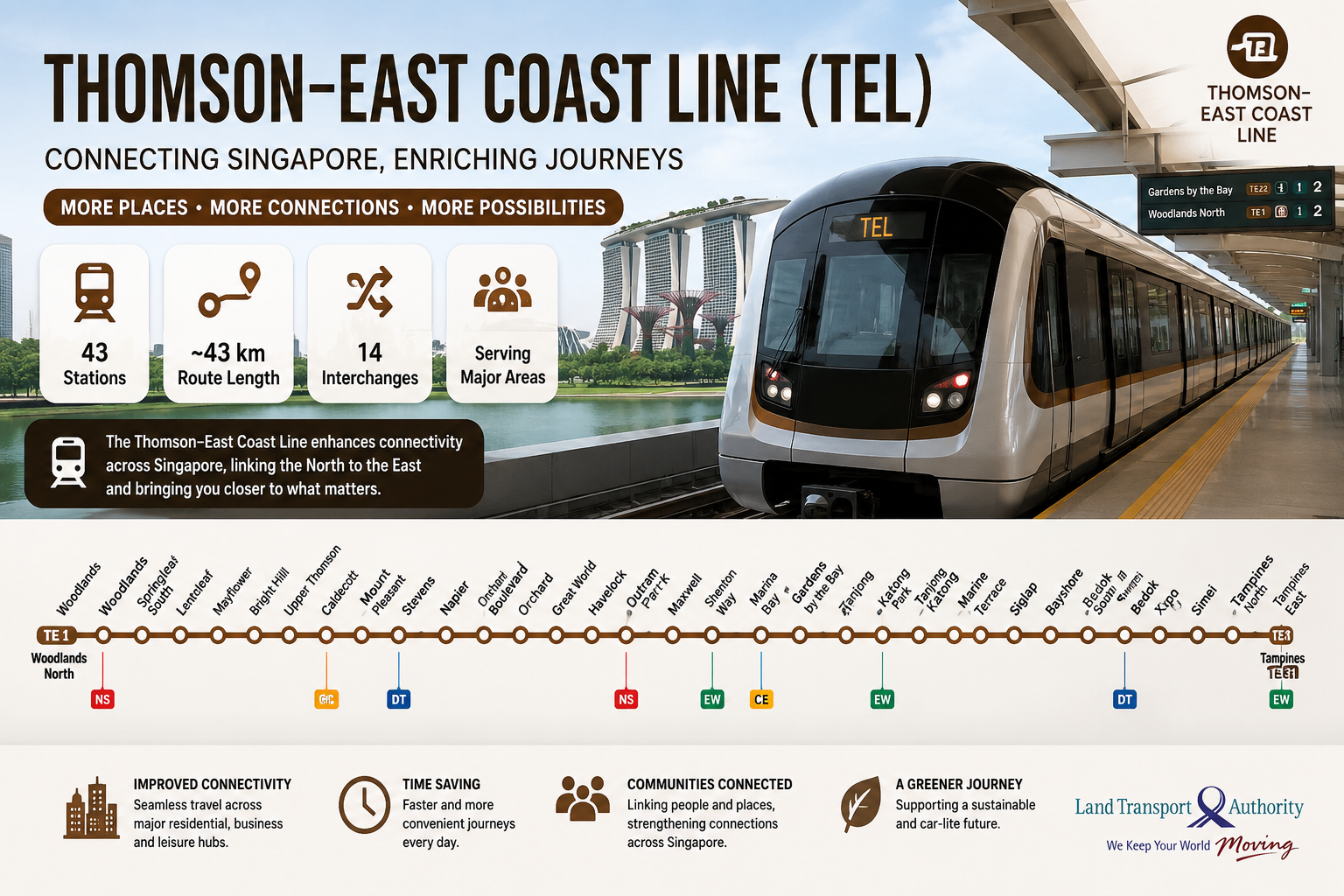
Singapore’s MRT network has always been one of the country’s biggest strengths. Fast, reliable, and constantly improving, it connects neighbourhoods, business districts, schools, and lifestyle destinations with impressive efficiency. One of the newest additions to this network is the Thomson East Coast Line, a major rail development designed to make travelling across Singapore easier and more convenient.
The Thomson East Coast Line, often known as TEL, connects the northern parts of Singapore to the eastern coastline while opening up direct access to areas that previously depended heavily on bus services or transfers. It brings MRT connectivity closer to residential estates, shopping areas, workplaces, and popular attractions.
With new stations opening in stages, the line has changed the way many Singaporeans plan their daily journeys. Shorter travel times, more interchange options, and better accessibility are just some of the reasons why TEL has become an important part of Singapore’s transport landscape.
Here’s everything you need to know about the Thomson East Coast Line, from its route and stations to the benefits it brings to commuters.
What Is the Thomson East Coast Line?
The Thomson East Coast Line is Singapore’s sixth MRT line and is operated under the Mass Rapid Transit system. It runs through a long stretch of Singapore, connecting the northern area of Woodlands with the eastern coastal region towards Sungei Bedok.
The line was developed to improve connectivity in areas that did not previously have direct MRT access. Before TEL, residents in places like Thomson, Marine Parade, and parts of the East Coast relied mainly on buses or travelled through other MRT routes with additional transfers.
The line uses a distinctive brown colour on MRT maps, making it easy for passengers to identify. It was introduced in phases, allowing different sections to open progressively instead of waiting years for the entire route to be completed.
And that phased approach has helped commuters experience improvements earlier. Residents near completed stations could enjoy faster journeys while construction continued on remaining sections.
Thomson East Coast Line Route and Coverage
The Thomson East Coast Line stretches approximately 43 kilometres and includes 32 stations when fully completed. The route passes through a mix of residential neighbourhoods, commercial areas, and major transport hubs.
The line connects several important districts, including:
- Woodlands
- Springleaf
- Thomson
- Stevens
- Orchard
- Marina Bay
- Tanjong Rhu
- Marine Parade
- East Coast
- Bedok South
- Sungei Bedok
One of the biggest advantages of TEL is that it fills important gaps in Singapore’s MRT network. Areas along the Thomson and East Coast corridors now have direct rail access, reducing reliance on connecting bus services.
For commuters travelling across Singapore, this means fewer transfers and more predictable travel times.
Thomson East Coast Line Stations You Should Know
The Thomson East Coast Line features many stations that serve key neighbourhoods and destinations. Some stations have quickly become popular because of their connections and surrounding amenities.
Woodlands Station
Woodlands is an important northern gateway. The TEL station connects with the existing North South Line, creating a stronger transport link for residents in the northern region.
With the future development of surrounding areas, Woodlands is expected to become even more connected and convenient.
Springleaf Station
Located near nature areas and residential developments, Springleaf Station provides better accessibility for people living around Upper Thomson.
It also supports recreational travel for those visiting nearby green spaces.
Thomson-East Coast Line at Orchard Station
Orchard is one of Singapore’s most famous shopping districts. The TEL connection adds another transport option for shoppers, office workers, and tourists visiting Orchard Road.
The station also improves connectivity between the TEL and existing MRT services.
Stevens Station
Stevens Station provides interchange access between the Thomson East Coast Line and Downtown Line.
This makes it easier for commuters travelling between northern areas and the central business districts.
Marina Bay Station
Marina Bay is a major business and lifestyle destination. The TEL connection strengthens access to one of Singapore’s key financial areas.
Workers and visitors can now enjoy more route choices when travelling to Marina Bay.
Marine Parade Station
Marine Parade has long been a popular residential and shopping area. The arrival of TEL has transformed daily commuting for residents by providing direct MRT access.
Places like malls, food centres, and recreational areas around Marine Parade are now easier to reach.
Key Interchanges Along the Thomson East Coast Line
One of the strongest features of TEL is its interchange connections with other MRT lines.
Important interchange stations include:
- Woodlands — connects with the North South Line
- Stevens — connects with the Downtown Line
- Orchard — connects with the North South Line
- Outram Park — connects with the East West Line and North East Line
- Marina Bay — connects with the North South Line and Circle Line
- Sungei Bedok — connects with the Downtown Line
These connections make the Thomson East Coast Line more than just a neighbourhood route. It acts as a bridge linking different parts of Singapore.
A commuter from the north can now travel towards the east with fewer transfers. Someone from the East Coast can access central Singapore more directly. Small changes, but they add up every single day.
Benefits of the Thomson East Coast Line
Faster Travel Times
The biggest advantage of TEL is reduced travelling time. Areas that previously required multiple bus connections now have direct MRT access.
For daily commuters, saving even 10 to 20 minutes each way can make a noticeable difference over weeks and months.
Better Accessibility for Residential Areas
Many neighbourhoods along the route have experienced improved connectivity.
Residents no longer need to depend entirely on feeder buses. The MRT station becomes a reliable transport option for work, school, shopping, and leisure activities.
Supporting Singapore’s Growth
Transport infrastructure plays an important role in urban development. New MRT lines often encourage businesses, residential projects, and community spaces to grow around stations.
The Thomson East Coast Line supports Singapore’s long-term plans for creating more connected and liveable neighbourhoods.
More Convenient Travel for Tourists
Visitors to Singapore can also benefit from TEL. Popular areas such as Orchard, Marina Bay, and East Coast are easier to access.
Tourists have more route choices when exploring attractions, shopping areas, and dining spots.
How the Thomson East Coast Line Improves Daily Commuting
Singapore’s transport system is designed around convenience, but every new MRT line changes travel habits.
Before TEL, someone living near East Coast might take a bus to a nearby MRT station, then continue their journey. Now, they can start their trip directly from an MRT station closer to home.
The same applies to residents in Thomson and northern areas.
The line also helps reduce pressure on existing MRT routes by distributing passenger traffic more evenly. When more people have alternative routes, crowded stations and trains can become easier to manage.
Future Expansion and What to Expect
The Thomson East Coast Line continues to develop as Singapore completes additional phases. Future extensions will further improve connections and provide more travel options.
As more stations become operational, the benefits of the line will become even more noticeable. New connections can reshape commuting patterns, especially for residents who previously lived far from MRT access.
Singapore’s transport planning has always focused on long-term needs, and TEL reflects that approach.
Tips for Travelling on the Thomson East Coast Line
If you’re using TEL regularly, a few simple tips can make your journey smoother:
- Check MRT operating hours before early morning or late-night trips.
- Use interchange stations strategically to reduce walking time.
- Explore nearby malls, parks, and dining areas around TEL stations.
- Plan alternative routes during peak hours.
- Use official MRT apps for real-time updates.
Sometimes the fastest route isn’t the one you expect. A quick check can save time.
Final Thoughts on the Thomson East Coast Line
The Thomson East Coast Line represents a major step forward for Singapore’s MRT network. It improves accessibility, connects previously underserved areas, and gives commuters more flexibility when travelling across the island.
From Woodlands in the north to the East Coast region, TEL creates stronger links between communities, workplaces, and attractions. It’s not just another MRT line on the map — it’s part of Singapore’s ongoing effort to build a more connected city.
For residents, workers, and visitors, the Thomson East Coast Line makes everyday travel simpler, faster, and much more convenient. As the network continues to grow, this line will likely become an essential part of Singapore’s transport experience for many years ahead.