
 By Global Arena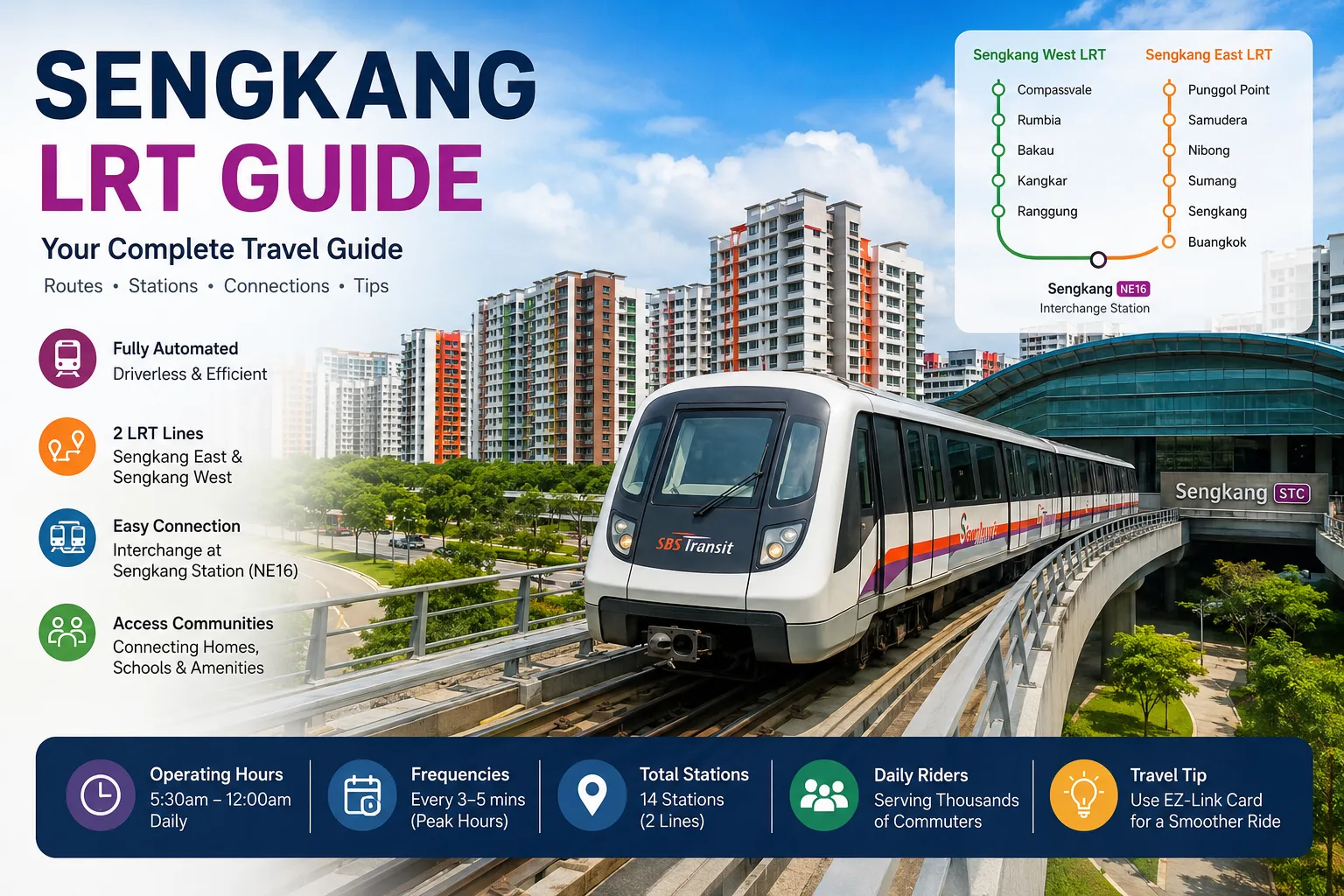
Getting around Singapore’s neighbourhoods is surprisingly easy once you understand the public transport network. The Sengkang LRT Guide is one of those small but important rail systems that quietly keeps daily life moving for thousands of residents.
Located in the north-eastern part of Singapore, the Sengkang LRT Guide connects housing estates, schools, shopping areas, and the Sengkang MRT station. It acts as a convenient link between residential blocks and the wider MRT network, especially for commuters travelling on the North East Line.
This Sengkang LRT Guide covers everything you need — from station information and route details to operating hours, fares, nearby attractions, and practical travel tips. Whether you’re a new resident, a visitor exploring Sengkang, or simply trying to understand Singapore’s LRT system better, this guide will help you plan your trip with ease.
What Is the Sengkang LRT?
The Sengkang LRT Guide is an automated light rail system serving the Sengkang residential area. It was officially opened in 2003 and became the second LRT system in Singapore after Bukit Panjang LRT.
The line was designed to provide better connectivity within Sengkang’s growing housing estates. Instead of walking long distances from MRT stations to individual neighbourhoods, residents can hop onto the LRT and reach their blocks faster.
The Sengkang LRT Guide operates together with the Sengkang MRT station, which connects passengers to the North East Line. This makes it a valuable transport option for commuters heading towards places like Dhoby Ghaut, Chinatown, HarbourFront, and Punggol.
A simple way to think about it:
MRT = connects major areas across Singapore
LRT = connects neighbourhoods to MRT stations
That’s the role the Sengkang LRT Guide plays every day.
Sengkang LRT Route Overview
The Sengkang LRT Guide consists of two loops:
- East Loop
- West Loop
Both loops start and end at Sengkang MRT/LRT station, allowing passengers to transfer easily between the LRT and North East Line.
The system uses automated driverless trains, meaning operations are controlled through advanced signalling technology. Trains run frequently, making it convenient even during busy commuting hours.
Sengkang LRT East Loop
The East Loop serves areas around Compassvale and Rivervale.
Stations on the East Loop include:
- Sengkang MRT/LRT Station
- Compassvale Station
- Ranggung Station
- Buangkok Station
- Kangkar Station
- Rivervale Station
- Bakau Station
Residents living around Compassvale and Rivervale commonly use this loop for daily travel to Sengkang Central, schools, and nearby amenities.
Sengkang LRT Guide West Loop
The West Loop serves the western side of Sengkang, including Fernvale and Cheng Lim areas.
Stations on the West Loop include:
- Sengkang MRT/LRT Station
- Cheng Lim Station
- Farmway Station
- Kupang Station
- Thanggam Station
- Fernvale Station
- Layar Station
The West Loop has become increasingly important as newer residential developments and community facilities have grown around Fernvale.
Sengkang LRT Operating Hours
The Sengkang LRT Guide generally follows the operating hours of Singapore’s MRT system.
Typical operating hours:
- First train: Around 5:30 AM
- Last train: Around midnight
However, exact timings may vary depending on weekdays, weekends, public holidays, and special events.
If you’re catching an early morning flight or returning home late at night, it’s always better to check the latest train timings through official transport apps before travelling.
Late-night commuters should also remember that the last LRT service timing depends on the connection with the MRT. Missing the final train can mean waiting longer or finding alternative transport options.
Sengkang LRT Fare Information
The Sengkang LRT uses Singapore’s distance-based fare system.
Passengers can pay using:
- EZ-Link cards
- NETS FlashPay cards
- Contactless bank cards
- Mobile wallet payments
- Standard tickets (where available)
The fare depends on the total distance travelled, including transfers between the LRT and MRT.
For example, a commuter travelling from a Sengkang LRT station to another MRT location will pay based on the complete journey distance rather than separate fares for each train.
This makes transfers smoother and more affordable.
Connecting From Sengkang LRT to MRT
The biggest advantage of the Sengkang LRT is its direct connection to the Sengkang MRT station.
From Sengkang MRT, commuters can access the North East Line, which provides convenient routes to:
- Serangoon
- Little India
- Dhoby Ghaut
- Chinatown
- Outram Park
- HarbourFront
For many residents, the journey is simple:
Home → Sengkang LRT → Sengkang MRT → Destination
No complicated transfers. No long walks.
And during rainy days, this connection becomes even more useful because commuters can avoid travelling outdoors for extended periods.
Popular Places Near Sengkang LRT Stations
The Sengkang LRT is surrounded by plenty of everyday conveniences. It’s not just a transport service — it connects people to places they visit regularly.
Compass One
Located directly above Sengkang MRT station, Compass One is one of the main shopping centres in the area.
Visitors can find:
- Restaurants and cafes
- Supermarkets
- Retail shops
- Healthcare services
- Entertainment options
It’s a common meeting place for Sengkang residents.
Sengkang Riverside Park
Nature lovers can visit Sengkang Riverside Park, a peaceful green space featuring walking paths, ponds, and open areas for recreation.
It’s a nice spot for:
- Evening walks
- Cycling
- Family outings
- Relaxing away from busy streets
Sengkang General Hospital
The LRT also provides convenient access towards healthcare facilities around Sengkang.
Sengkang General Hospital serves residents in the north-eastern region and is an important healthcare hub.
Tips for Using the Sengkang LRT
The Sengkang LRT is simple to use, but these small tips can make your journey smoother.
Check the Correct Loop
One common mistake among first-time users is boarding the wrong loop.
Always check whether you need:
- East Loop
- West Loop
The station signs clearly indicate the direction, so take a few seconds to confirm before boarding.
Avoid Peak Hour Crowds
The busiest periods are usually:
- 7:00 AM to 9:00 AM
- 5:00 PM to 7:30 PM
During these times, trains can become crowded, especially near Sengkang MRT station.
If your schedule is flexible, travelling slightly earlier or later can make the journey much more comfortable.
Use Transport Apps
Apps such as MyTransport Singapore and Google Maps can help with:
- Train arrival times
- Route planning
- Service updates
- Alternative routes
Singapore’s transport network changes occasionally, so real-time information is useful.
Why the Sengkang LRT Is Important for Residents
The Sengkang LRT may not be as famous as Singapore’s MRT lines, but its role is significant.
For thousands of residents, it provides the final connection between home and the main transport network. Without feeder services like the Sengkang LRT, travelling within large residential towns would take much longer.
It also supports Singapore’s approach to building well-connected neighbourhoods where people can access transport, schools, healthcare, and shopping facilities without relying heavily on cars.
Small system. Big impact.
Sengkang LRT Guide: Final Thoughts
The Sengkang LRT is a convenient and reliable transport option for residents and visitors exploring Singapore’s north-eastern region. With its East and West Loops, direct MRT connection, affordable fares, and easy access to nearby amenities, it plays an important part in everyday commuting.
Whether you’re travelling to work, heading to school, visiting friends, or exploring Sengkang’s attractions, understanding the route and station layout can save time and make your journey smoother.
This Sengkang LRT Guide gives you the essentials — routes, operating hours, fares, nearby places, and practical tips. Once you get familiar with the system, using the Sengkang LRT becomes effortless.
A short ride, a simple connection, and a much easier way to move around one of Singapore’s fastest-growing neighbourhoods.