
 By Global Arena
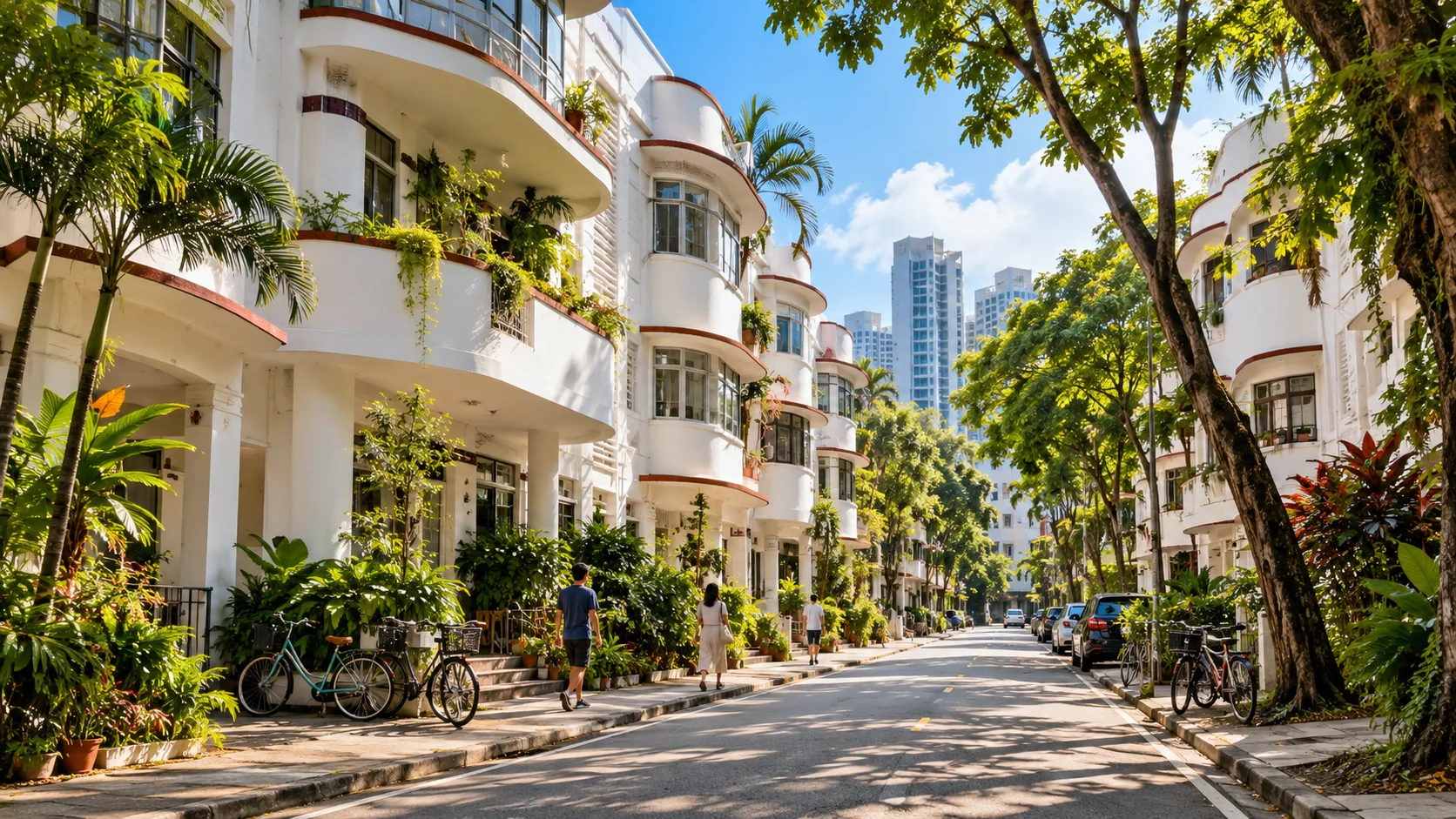
Tiong Bahru is one of Singapore’s most distinctive neighbourhoods, known for its historic architecture, traditional food, independent cafés and peaceful residential streets. Located close to the city centre, the area combines old Singapore charm with modern urban living.
Visitors come to Tiong Bahru to explore its Art Deco buildings, enjoy local hawker food, discover independent bookstores and experience a quieter side of Singapore.
Unlike the busy shopping districts of Orchard Road or Marina Bay, Tiong Bahru offers a relaxed atmosphere. Its narrow streets, heritage flats and neighbourhood shops make it an interesting destination for both tourists and residents.
Where Is Tiong Bahru Located?
Tiong Bahru is situated in central Singapore, within the Bukit Merah planning area. The neighbourhood is close to Outram, Chinatown and the Singapore River.
The area is easily accessible through Tiong Bahru MRT Station on the East West Line. From the station, visitors can walk towards the historic residential estate, where many popular cafés and attractions are located.
Tiong Bahru is also connected to other parts of Singapore through public buses and nearby major roads.
Despite its central location, the neighbourhood maintains a quieter atmosphere than many commercial districts.
Quick Facts About Tiong Bahru
| Feature | Details |
|---|---|
| Location | Bukit Merah, Central Singapore |
| Nearest MRT | Tiong Bahru MRT Station (EW17) |
| MRT Line | East West Line |
| Famous For | Art Deco architecture, cafés and hawker food |
| Main Food Destination | Tiong Bahru Market |
| Popular Streets | Yong Siak Street, Eng Hoon Street and Tiong Poh Road |
| Heritage Landmark | Qi Tian Gong Temple |
| Recommended Visit Duration | 2–4 hours |
| Best Activities | Walking, photography, dining and shopping |
History of Tiong Bahru
Tiong Bahru has an important place in Singapore’s housing history.
Its name is commonly interpreted as a combination of the Hokkien word tiong, meaning grave or cemetery, and the Malay word bahru, meaning new.
The area was once associated with burial grounds before its transformation into a residential neighbourhood.
During the 1930s, the Singapore Improvement Trust developed Tiong Bahru as one of Singapore’s earliest planned public housing estates.
The original buildings were designed with modern architectural ideas that were unusual for residential developments at the time.
Many featured curved balconies, horizontal windows, flat roofs and streamlined façades.
These architectural characteristics remain visible today, giving the neighbourhood its recognisable appearance.
Following Singapore’s independence, newer residential developments appeared around the older estate. However, the historic section retained much of its original identity.
In 2003, 20 blocks of pre-war flats in Tiong Bahru were granted conservation status by the Urban Redevelopment Authority.
Today, the neighbourhood represents an important connection between Singapore’s early urban development and its modern residential landscape.
Things to Do in Tiong Bahru Singapore
Tiong Bahru offers a variety of activities for visitors interested in history, food, photography and local culture.
1. Explore the Art Deco Buildings
The historic residential blocks are among Tiong Bahru’s most recognisable attractions.
Many buildings feature rounded corners, spiral staircases, curved balconies and simple geometric details.
Walking along Tiong Poh Road, Seng Poh Road and the surrounding streets provides an opportunity to appreciate these architectural features.
The buildings are particularly attractive during the morning when natural sunlight highlights their shapes.
Visitors should remember that these are residential properties and avoid entering private areas.
2. Visit Tiong Bahru Mark
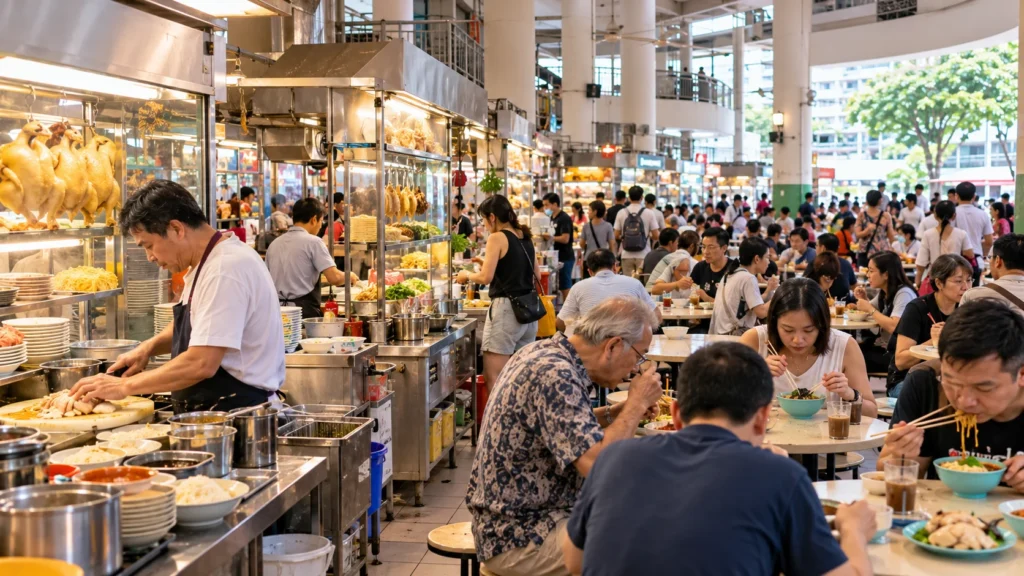
Tiong Bahru Market is one of the neighbourhood’s most popular destinations.
Located along Seng Poh Road, the market combines a traditional wet market with an upstairs hawker centre.
The ground floor is known for fresh vegetables, seafood, meat and other everyday groceries.
Upstairs, visitors can find Singaporean dishes including chicken rice, noodles, chwee kueh and traditional breakfast options.
The market is especially lively during the morning and lunchtime.
It provides an opportunity to experience local food culture without travelling far from central Singapore.
3. Discover Yong Siak Street
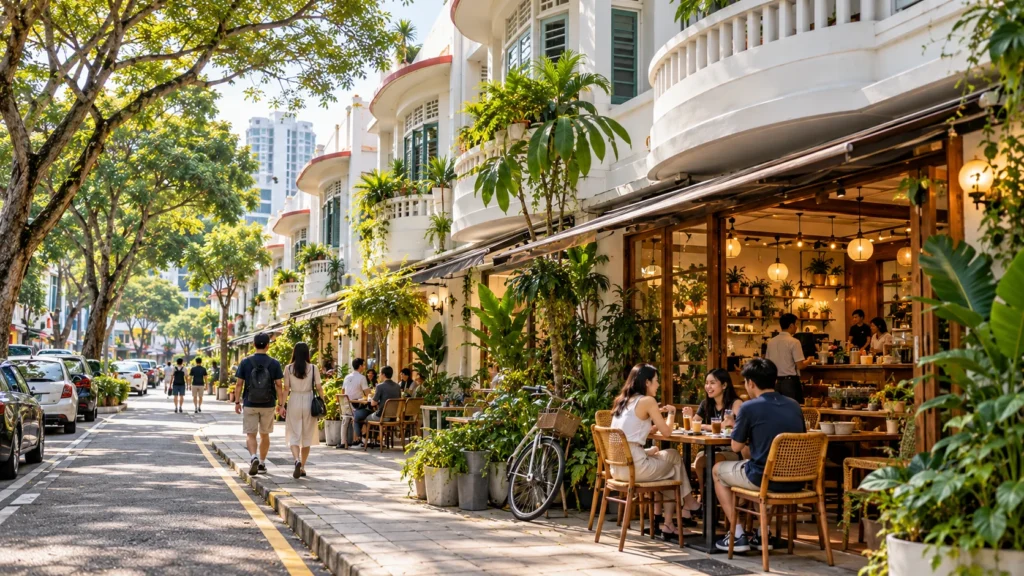
Yong Siak Street is known for its independent shops, cafés and creative businesses.
The street has become a popular destination for visitors interested in design, books and lifestyle shopping.
Traditional residential buildings stand alongside contemporary retail spaces, creating an interesting contrast.
The area is compact enough to explore comfortably on foot.
Visitors can spend time browsing bookstores, stopping for coffee or photographing the surrounding architecture.
4. Visit BooksActually
BooksActually is closely associated with Tiong Bahru’s independent literary scene.
The Singapore bookstore became known for promoting local writers, independent publications and literary culture.
Its former physical shop on Yong Siak Street was an important neighbourhood attraction. However, the store moved away from that premises in 2020.
Visitors should not assume the original shop remains open at its former address.
Its history still reflects the creative character that helped establish Tiong Bahru as a cultural destination.
5. Explore Qi Tian Gong Temple
Qi Tian Gong Temple is a historic Chinese temple associated with the worship of the Monkey God, Sun Wukong.
Located on Eng Hoon Street, the temple represents an important part of the neighbourhood’s cultural heritage.
Its traditional religious architecture contrasts with the surrounding residential buildings.
Visitors can appreciate the temple’s exterior and learn about local religious traditions.
Anyone entering should dress respectfully and follow the temple’s visitor guidelines.
Best Food to Try in Tiong Bahru
Food is one of the biggest reasons people visit Tiong Bahru.
The neighbourhood offers traditional Singaporean dishes, freshly baked pastries, specialty coffee and contemporary café meals.
Tiong Bahru Chwee Kueh
Chwee kueh is a popular traditional breakfast dish made from steamed rice cakes.
The cakes are topped with preserved radish and commonly served with chilli.
Tiong Bahru is particularly associated with this dish, making it a popular choice for first-time visitors.
Hainanese Chicken Rice
Chicken rice is widely available throughout Singapore, including at Tiong Bahru Market.
The dish usually includes tender chicken, fragrant rice, chilli sauce and accompanying condiments.
It is a convenient lunch option for visitors exploring the neighbourhood.
Traditional Noodles
Visitors can find different noodle dishes at the local hawker centre.
Options may include fishball noodles, wonton noodles and other Singaporean favourites.
Availability depends on individual stalls and their operating hours.
Fresh Bread and Pastries
Tiong Bahru is also known for its bakery culture.
Several neighbourhood cafés and bakeries offer croissants, bread, cakes and coffee.
Tiong Bahru Bakery, a well-known Singapore bakery brand, has strong historical ties to the neighbourhood.
Its original outlet helped establish the area’s reputation as a destination for pastries and specialty coffee.
Best Cafés in Tiong Bahru
Tiong Bahru has developed a reputation for its café scene.
Many cafés operate within older buildings, combining historic surroundings with modern interiors.
Visitors can find espresso-based drinks, brunch dishes, pastries and desserts.
Some cafés feature minimalist designs, while others maintain a more traditional neighbourhood atmosphere.
Yong Siak Street and the surrounding roads are good places to explore café options.
Weekend afternoons can be busy, so weekday mornings may provide a more relaxed experience.
Tiong Bahru Heritage Trail
The Tiong Bahru Heritage Trail is an excellent way to learn about the neighbourhood’s history.
Developed by Singapore’s National Heritage Board, the trail highlights important buildings, historical locations and cultural landmarks.
Visitors can discover how the area changed from burial grounds into a modern residential estate.
The trail also introduces the architectural characteristics of the pre-war flats and the lives of earlier residents.
Heritage walking is particularly enjoyable because many attractions are located close together.
Comfortable footwear and drinking water are recommended, especially during Singapore’s warmer afternoons.
How to Get to Tiong Bahru
The easiest way to reach Tiong Bahru is by MRT.
Take the East West Line to Tiong Bahru MRT Station, identified as EW17.
From the station, visitors can walk towards the historic estate around Seng Poh Road and Tiong Poh Road.
The journey to the older neighbourhood generally takes around 10–15 minutes on foot, depending on the destination and route.
Public buses and taxis are also available.
Visitors coming from Chinatown or Outram can reach the neighbourhood relatively quickly by public transport.
Best Time to Visit Tiong Bahru
Tiong Bahru can be visited throughout the year, although the experience changes depending on the time of day.
Morning is ideal for exploring the wet market, enjoying breakfast and photographing historic buildings.
Afternoons are suitable for café visits, bookstores and indoor shopping.
Weekends often attract larger crowds, particularly around popular food establishments.
| Time | Recommended Activity | What to Expect |
|---|---|---|
| 7 AM–9 AM | Traditional breakfast and wet market | Active local market atmosphere |
| 9 AM–11 AM | Heritage walk and photography | Comfortable morning exploration |
| 11 AM–1 PM | Hawker centre lunch | Busy food stalls and lunch crowds |
| 1 PM–3 PM | Café visits and shopping | Warmer weather, indoor activities |
| 3 PM–5 PM | Explore Yong Siak Street | Relaxed shopping and coffee |
| Weekend mornings | Food and heritage exploration | More visitors and possible queues |
These are suggested visiting periods, not confirmed operating hours for individual businesses.
Is Tiong Bahru Worth Visiting?
Tiong Bahru is worth visiting for travellers interested in Singapore beyond its major tourist attractions.
The neighbourhood provides a combination of architectural heritage, local food and independent businesses.
It is especially appealing to photographers because of its distinctive buildings and quieter streets.
Food enthusiasts can explore traditional hawker dishes and modern bakeries within a relatively small area.
Visitors interested in Singapore’s urban history can also learn about early public housing and conservation.
Unlike larger attractions that require an entire day, Tiong Bahru can be explored within a few hours.
Living in Tiong Bahru
Tiong Bahru is not only a tourist destination but also an established residential neighbourhood.
The area contains a mixture of conserved pre-war flats, newer HDB housing and private residential properties.
Residents benefit from access to public transport, markets, supermarkets and nearby commercial areas.
The neighbourhood is attractive to people who appreciate central-city convenience alongside a strong sense of local identity.
However, housing costs and availability vary significantly depending on the property type, size and location.
The conservation status of older buildings also means that certain renovation works are subject to specific requirements.
Nearby Places to Explore
Visitors can combine a trip to Tiong Bahru with other destinations in central Singapore.
Chinatown offers heritage streets, traditional shops and historic temples.
Outram Park provides convenient transport connections and access to nearby dining areas.
The Singapore River precinct is another option for visitors interested in waterfront walks and restaurants.
These destinations make Tiong Bahru a useful starting point for exploring different parts of central Singapore.
Frequently Asked Questions About Tiong Bahru
1. What is Tiong Bahru famous for?
Tiong Bahru is famous for its Art Deco residential buildings, traditional hawker food, independent cafés and historic neighbourhood atmosphere.
2. Which MRT station is closest to Tiong Bahru?
Tiong Bahru MRT Station (EW17) on the East West Line is the main station serving the neighbourhood.
3. Is Tiong Bahru a good place for tourists?
Yes. It offers heritage architecture, local food, shopping and cultural attractions within a walkable neighbourhood.
4. How much time is needed to explore Tiong Bahru?
Most visitors can explore the main attractions in approximately two to four hours.
5. What food should I try in Tiong Bahru?
Popular choices include chwee kueh, chicken rice, local noodles, traditional breakfast dishes and freshly baked pastries.
6. Is Tiong Bahru an expensive neighbourhood?
Tiong Bahru includes both affordable hawker food and higher-priced cafés. Residential property prices vary according to the type and location.
7. Can I visit Tiong Bahru for free?
Yes. Walking through the neighbourhood and viewing its historic architecture is free. Food, shopping and other purchases cost extra.
Final Thoughts
Tiong Bahru remains one of Singapore’s most interesting heritage neighbourhoods.
Its conserved residential buildings, traditional food culture and independent businesses give it an identity that differs from the city’s larger commercial districts.
Visitors can enjoy a local breakfast, explore historic streets, discover small shops and experience an important part of Singapore’s architectural history.
For anyone planning a Singapore itinerary, Tiong Bahru offers a rewarding combination of culture, food and everyday neighbourhood life.