
 By Global Arena
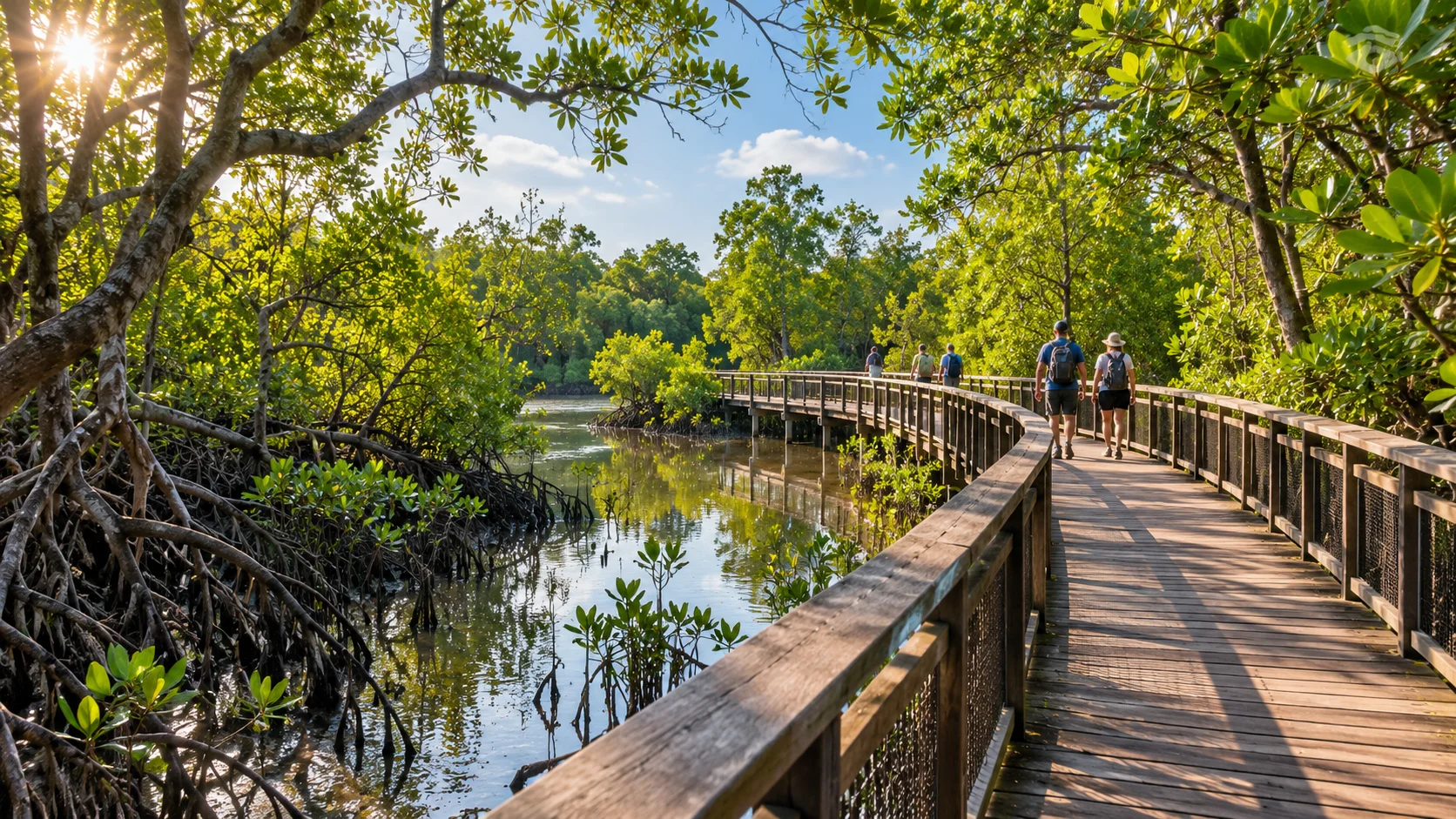
Sungei Buloh Wetland Reserve is one of Singapore’s most peaceful nature destinations. Located in the northwestern part of the island, this protected wetland is known for its mangrove forests, migratory birds, mudflats, and wildlife-rich walking trails.
Unlike Singapore’s busy shopping districts and popular tourist attractions, Sungei Buloh offers visitors a chance to explore natural habitats and observe animals in the wild.
The reserve is particularly popular among birdwatchers, photographers, families, and nature lovers. Visitors can walk along mangrove boardwalks, explore observation points, and discover how Singapore protects its coastal ecosystems.
This guide covers the reserve’s attractions, walking trails, wildlife, opening hours, transport options, and practical tips for planning a visit in 2026.
What Is Sungei Buloh Wetland Reserve?
Sungei Buloh Wetland Reserve is Singapore’s first ASEAN Heritage Park. It covers approximately 202 hectares of protected wetland habitats, including mangrove forests, freshwater ponds, mudflats, and coastal vegetation.
The area was officially opened as a nature park in 1993 and designated a nature reserve in 2002.
Today, it is managed by Singapore’s National Parks Board (NParks).
The reserve plays an important role in protecting biodiversity, especially migratory shorebirds that travel along the East Asian–Australasian Flyway.
During migration season, birds arrive from northern breeding grounds to feed and rest in the wetlands.
Visitors can explore the reserve without disturbing these important habitats by following designated walking trails and using birdwatching shelters.
Sungei Buloh Wetland Reserve Visitor Information
The following table provides a quick overview for visitors planning a trip.
| Information | Details |
|---|---|
| Location | Northwestern Singapore, near Kranji |
| Main address | 301 Neo Tiew Crescent, Singapore 718925 |
| Entrance fee | Free |
| Opening hours | 7:00 AM–7:00 PM daily |
| Best visiting time | Early morning |
| Recommended duration | 2–3 hours |
| Main attractions | Mangroves, mudflats, birds, nature trails |
| Best birdwatching season | September to March |
| Suitable for | Families, photographers, birdwatchers, nature lovers |
| Managed by | National Parks Board (NParks) |
The reserve has different visitor access points, so checking your intended entrance before travelling is helpful.
Why Is Sungei Buloh Wetland Reserve Famous?
Sungei Buloh is famous for its rich wildlife and natural coastal environment.
It is one of the few places in Singapore where visitors can observe extensive mangrove habitats and migratory shorebirds within a protected nature reserve.
Its location near the Johor Strait makes it an important resting and feeding area for birds travelling across Asia.
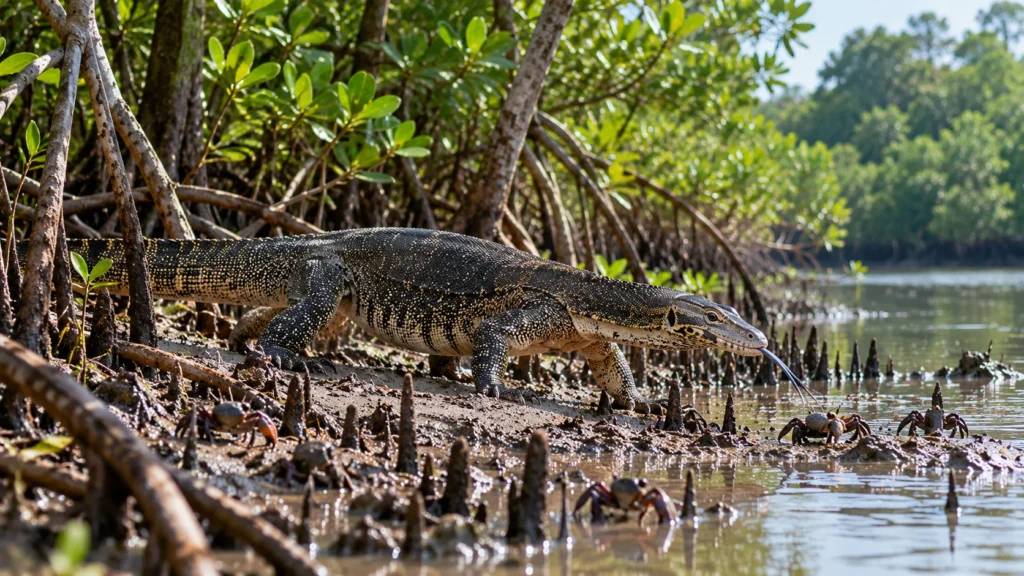
The reserve is also home to resident wildlife, including monitor lizards, mudskippers, crabs, spiders, and various bird species.
Another reason people visit is its quiet atmosphere. Instead of crowded attractions, visitors experience natural sounds, shaded trails, and views of wetlands.
For people interested in Singapore’s environment, Sungei Buloh provides a closer look at how coastal ecosystems support wildlife.
Best Things to Do at Sungei Buloh Wetland Reserve
1. Explore the Mangrove Boardwalk
The Mangrove Boardwalk is one of the reserve’s most interesting attractions.
It allows visitors to walk through mangrove vegetation while observing the surrounding ecosystem without stepping onto the muddy forest floor.
Along the route, you may notice exposed tree roots, small crabs, mudskippers, and insects living among the mangroves.
The boardwalk is particularly interesting during low tide, when more of the muddy habitat becomes visible.
Visitors can choose shorter boardwalk sections or explore a longer route depending on their available time.
2. Watch Migratory Birds
Birdwatching is one of the main reasons people visit Sungei Buloh Wetland Reserve.
More than 200 bird species have been recorded here, including resident birds and seasonal visitors.
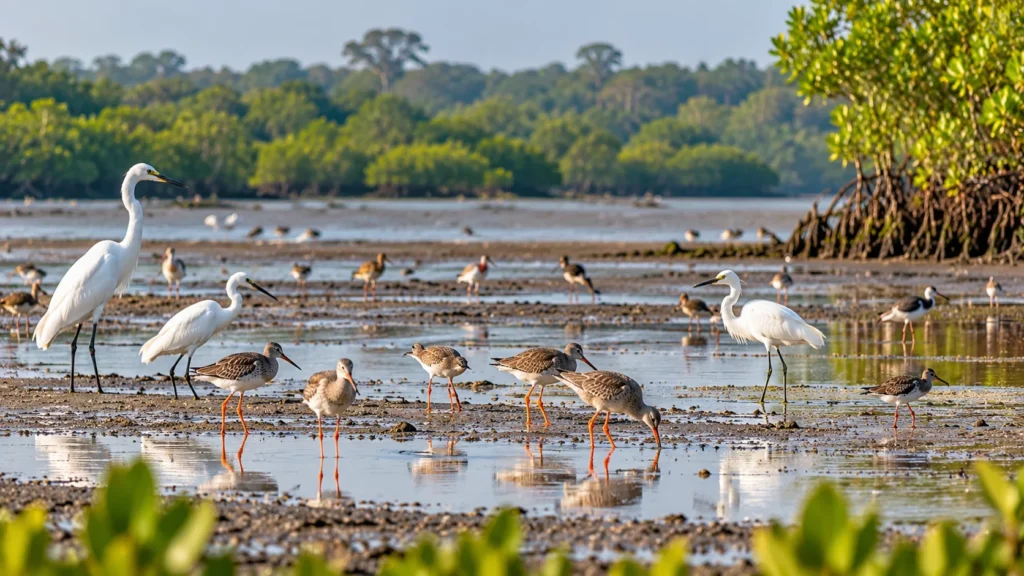
From August to April, migratory birds may be seen feeding in the reserve’s mudflats. Species include Common Redshanks, Whimbrels, Common Greenshanks, and Pacific Golden Plovers.
Birdwatching shelters provide places to observe these birds without approaching them.
A pair of binoculars is useful, particularly when birds are feeding far from the walking paths.
The Migratory Bird Trail is one of the best locations for observing shorebirds.
3. Walk Along the Coastal Trail
The Coastal Trail offers beautiful views of the coastal environment.
This approximately 1.3-kilometre route passes different habitats, including freshwater ponds, mangroves, and mudflats.
Visitors can stop at scenic observation points such as Eagle Point and Kingfisher Pod.
The trail is suitable for visitors who prefer an easy nature walk rather than a demanding hike.
Morning visits are especially pleasant because temperatures are generally cooler.
4. Visit the Aerie Tower
The Aerie Tower provides an elevated perspective of the wetland landscape.
Standing approximately 18 metres high, it offers panoramic views of the reserve and surrounding greenery.
Visitors can observe the arrangement of ponds, trees, and coastal habitats from above.
The tower is also an interesting location for landscape photography.
Take your time while exploring the area, as wildlife sightings can happen unexpectedly.
5. Discover the Junior Wetland
The Junior Wetland is a rehabilitated freshwater habitat near the Visitor Centre.
It is a good place for families to introduce children to wetland wildlife.
Dragonflies, fish, and waterbirds may be observed around the pond.
Children can learn about freshwater ecosystems and discover how different species depend on aquatic habitats.
Adults should supervise young children, particularly around the water and stone steps.
Wildlife You Can See at Sungei Buloh
Sungei Buloh supports a remarkable variety of wildlife.
Some animals are relatively easy to spot, while others require patience and careful observation.
Malayan Water Monitors
Malayan water monitors are among the reserve’s most recognisable reptiles.
These large lizards may be seen swimming, resting near water, or moving along muddy banks.
Although they can look intimidating, visitors should simply observe them from a safe distance without attempting to touch or feed them.
Estuarine Crocodiles
Estuarine crocodiles are occasionally spotted in the reserve.
They may be seen resting near water or floating close to the surface.
Visitors should remain on designated paths, follow warning signs, and never approach crocodiles.
Mudskippers and Mangrove Crabs
Mudskippers are unusual fish capable of moving across exposed mud.
They are especially interesting to observe during low tide.
Mangrove crabs also play an important role in the ecosystem by processing organic material and interacting with the muddy environment.
Otters and Resident Birds
Smooth-coated otters are another species visitors may encounter, although sightings are not guaranteed.
Resident birds include kingfishers, herons, egrets, and sunbirds.
Watching these animals in their natural surroundings is part of what makes Sungei Buloh different from a conventional tourist attraction.
Sungei Buloh Wetland Reserve Walking Trails
Visitors can select different trails according to their interests and available time.
| Trail | Approximate Length | Main Highlights |
|---|---|---|
| Migratory Bird Trail | 1.95 km | Shorebirds, tidal ponds, bird hides |
| Mangrove Boardwalk | 500 m or 3 km | Mangrove trees, mudskippers, crabs |
| Coastal Trail | 1.3 km | Coastal views, Eagle Point, observation pods |
| Forest Trail | 300 m | Forest vegetation and shaded surroundings |
| Mid-canopy Walk | 150 m | Elevated forest views, birds and insects |
These routes are generally classified as easy by NParks, although walking conditions can be affected by weather and temporary closures.
How to Get to Sungei Buloh Wetland Reserve
Sungei Buloh is located in northwestern Singapore, away from the main city centre.
By MRT and Bus
Kranji MRT Station is the most convenient rail connection.
From the station, visitors can use bus service 925 on Mondays to Saturdays or 925M on Sundays and public holidays.
Check the current bus route and stop before departure because services and operating arrangements may change.
By Car or Taxi
Driving or taking a taxi is convenient for families and visitors carrying photography equipment.
The reserve has parking facilities at its Visitor Centre and Wetland Centre.
The Visitor Centre is located at 60 Kranji Way, while the Wetland Centre is at 301 Neo Tiew Crescent.
Choosing the correct destination helps avoid unnecessary travel between entrances.
Best Time to Visit Sungei Buloh Wetland Reserve
The best time to visit depends on whether you are interested in wildlife, photography, or walking.
Early Morning
Between 7:00 AM and 10:00 AM is generally a comfortable period for exploring.
Temperatures are usually lower than in the afternoon, and wildlife may be active.
Morning light is also suitable for nature photography.
Migratory Bird Season
August to April is the broader migratory bird period identified by NParks.
The months from September to March are especially worth considering for birdwatching.
However, bird sightings depend on migration patterns, weather, tides, and individual species.
Low Tide
Low tide can reveal exposed mudflats where mudskippers, crabs, and feeding shorebirds may be easier to observe.
Check Singapore’s tide predictions before visiting if mudflat wildlife is your main interest.
What to Bring for Your Visit
Preparing properly makes the visit more enjoyable, particularly because much of the reserve is outdoors.
Carry drinking water, comfortable walking shoes, insect repellent, sunscreen, and a hat.
Lightweight long-sleeved clothing can provide additional protection against mosquitoes and sunlight.
Birdwatchers may want binoculars, while photographers should bring a camera with suitable zoom capabilities.
Avoid carrying unnecessary heavy items, especially if you plan to explore several trails.
Important Rules for Visitors
Sungei Buloh is a protected nature reserve, so visitors must follow rules designed to protect wildlife.
Pets, cycling, jogging, fishing, and drone flying are not permitted.
Visitors should remain on designated paths, avoid loud noises, and never feed wild animals.
Commercial photography and certain organised group activities require advance permission.
Some areas may close temporarily because of high tides, flooding, or severe weather. Check NParks notices before travelling.
Is Sungei Buloh Wetland Reserve Worth Visiting?
Sungei Buloh is worth visiting for anyone interested in Singapore’s natural environment.
It offers a different experience from urban attractions such as Marina Bay or busy shopping districts.
The reserve is particularly rewarding for visitors who enjoy slow walks, observing wildlife, and spending time outdoors.
However, visitors expecting entertainment facilities, restaurants, or guaranteed animal sightings may find the experience less suitable.
Its main attraction is the opportunity to appreciate nature without disturbing it.
Frequently Asked Questions
1. Is Sungei Buloh Wetland Reserve free?
Yes. General admission to Sungei Buloh Wetland Reserve is free.
2. What are the opening hours?
The reserve opens daily from 7:00 AM to 7:00 PM, with last entry at 6:30 PM.
3. How long should I spend at Sungei Buloh?
Most visitors can enjoy the main attractions in approximately two to three hours.
4. Are there crocodiles at Sungei Buloh?
Yes. Estuarine crocodiles inhabit the reserve, but sightings are not guaranteed. Always maintain a safe distance.
5. What is the best month to visit Sungei Buloh?
September to March is a good period for migratory birdwatching, although the broader migration season extends from August to April.
6. Is Sungei Buloh suitable for children?
Yes. Families can explore easy trails and the Junior Wetland, provided children remain supervised.
7. Can I visit Sungei Buloh during rain?
Avoid visiting during thunderstorms or severe weather. Some trails may close because of flooding or high tides.
Final Thoughts
Sungei Buloh Wetland Reserve is one of Singapore’s most valuable natural attractions, offering visitors a chance to explore mangrove forests, observe migratory birds, and discover coastal wildlife.
Its peaceful walking trails, birdwatching shelters, and diverse habitats make it an excellent destination for nature enthusiasts and families.
For the best experience, arrive early, choose trails that match your interests, and allow enough time to observe the surroundings.
A visit to Sungei Buloh is not simply a walk through a park. It is an opportunity to discover an important part of Singapore’s natural heritage.