
 By Global Arena
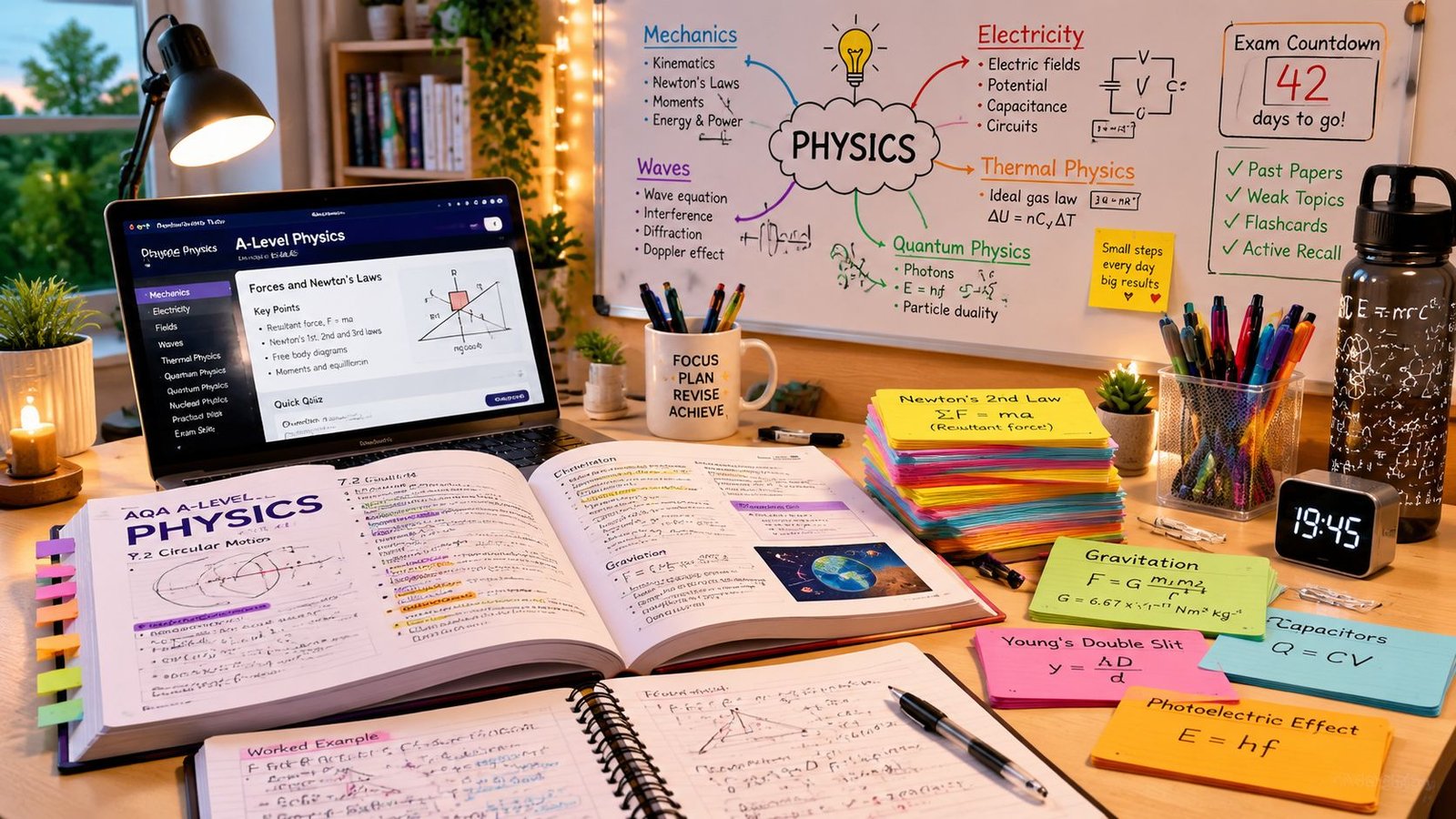
A-Level Physics covers advanced topics that require logical thinking, mathematical skills, and problem-solving. Students study subjects such as mechanics, electricity, waves, and quantum physics. Choosing the right learning materials can make these topics easier to understand and help students prepare for exams. When selecting an A-Level Physics Book, look for clear explanations, step-by-step solutions, relevant topics, and exam practice questions. A suitable book supports classroom learning, encourages independent study, and helps students revise effectively throughout the academic year with greater confidence.
| Key TakeawaysChoose books that explain difficult physics concepts clearly and accurately.Look for worked examples that demonstrate mathematical methods and problem-solving techniques.Check that the content aligns with your examination syllabus.Select resources with varied practice questions and examination-style exercises.Use books alongside class notes, regular revision, and timed practice sessions.Review mistakes regularly to identify knowledge gaps and improve exam performance. |
1. Check Whether the Book Matches Your A-Level Physics Syllabus
When choosing a physics book, make sure it matches your examination syllabus. A-Level Physics topics may vary depending on the examination board.
Check whether the book covers topics such as mechanics, electricity, waves, electromagnetism, and modern physics. Choose a book that explains the required concepts clearly and includes useful practice questions.
Avoid books that miss important topics or include too much unrelated content. Also, check the publication date and edition to ensure the book matches your current syllabus and examination requirements.
2. Look for Clear Explanations of Complex Concepts
Physics books should explain scientific concepts clearly, not just provide formulas to memorise. Topics such as electric fields, magnetic fields, gravity, and quantum physics can be difficult to understand without good explanations.
Choose books that explain each topic step by step, define important terms, and show how concepts are connected. For example, a mechanics chapter should explain force, mass, and acceleration before introducing harder problems.
Diagrams, graphs, and real-life examples can also make learning easier. Before buying a book, read a sample chapter on a difficult topic to check whether the explanations are easy to understand.
3. Choose Books With Step-by-Step Worked Examples
Worked examples are helpful in A-Level Physics because they show students how to solve problems step by step. A good book should explain how to identify given information, choose the correct formula, calculate the answer, and use the right units.
For example, a question about motion may require students to identify known values and select the correct equation.
Choose books that explain each step instead of showing only the final answer. After studying an example, try a similar question on your own. This helps improve accuracy, build confidence, and develop problem-solving skills.
4. Examine the Quality and Variety of Practice Questions
Practice questions help students apply what they learn and identify areas that need improvement. When choosing an A-Level Physics book, look for exercises with different difficulty levels, from basic questions to challenging problems.
A good book should include:
- Conceptual questions: Test understanding of physics principles.
- Numerical problems: Improve calculation skills and formula use.
- Graph-based questions: Develop data interpretation skills.
- Application questions: Help students solve unfamiliar problems.
- Multi-step problems: Build logical thinking.
- Practical questions: Test understanding of experiments and results.
Choose books with answers and explanations so students can check their work, learn from mistakes, and improve their problem-solving skills.
5. Make Sure the Book Supports Examination Preparation
Understanding physics is important, but students also need to know how to answer examination questions correctly. Choose books that include exam-style questions and practice exercises.
Look for questions using words such as state, describe, explain, and calculate. Each requires a different type of answer. For example, calculation questions need the correct method and units, while explanation questions require clear reasoning.
Books with model answers and mark schemes help students understand how marks are awarded and improve their answers. Timed practice can also help students manage their exam time.
Start by learning individual topics, then move on to mixed questions and timed practice as your preparation improves.
6. Check for Accurate Diagrams, Graphs, and Scientific Data
Physics books should include clear diagrams, graphs, and tables to help students understand scientific concepts. Examples include circuit diagrams, force diagrams, waves, and magnetic fields.
Students also need to practise reading graphs, identifying patterns, calculating gradients, and understanding how different quantities are related. For example, a velocity-time graph helps students understand acceleration and displacement.
Books with practical experiments can also teach students how to analyse results, identify errors, and suggest improvements. Choose a book where diagrams and graphs help explain concepts and solve problems.
7. Consider the Book’s Layout and Organisation
A well-organised physics book makes revision easier. Look for clear chapters, headings, summaries, and highlighted formulas to help you find important information quickly.
Students should understand what each formula means, including its symbols and units, rather than simply memorising it. Chapter summaries, key definitions, and practice questions can also support revision.
Students who need to strengthen their basic knowledge can use a secondary books to review topics such as forces, energy, electricity, and waves. However, these books should only provide extra support. The main focus should remain on A-Level Physics materials that match the examination syllabus and requirements.
8. Choose a Book That Encourages Independent Revision
Independent study helps A-Level students understand concepts, practise questions, and track their progress. A good physics book should include clear explanations, worked examples, exercises, and answers for self-assessment.
Start by reviewing a topic, studying examples, and answering practice questions. Check your answers and note any mistakes. These may involve choosing the wrong formula, misunderstanding a concept, or using incorrect units.
Review your mistakes regularly to improve your understanding. Choose a book that suits your learning style. Some students prefer detailed explanations, while others learn better from short summaries and challenging questions. Checking sample pages can help you find the right resource.
Final Thoughts
Choosing the right A-Level Physics book involves more than comparing the number of chapters or practice questions. Students should prioritise accurate scientific explanations, syllabus relevance, clear worked examples, varied exercises, and resources that develop examination skills. A well-selected book can make complex concepts easier to understand while providing a structured foundation for consistent revision.
Students should also remember that successful preparation depends on how learning materials are used. Reviewing concepts regularly, practising unfamiliar problems, analysing mistakes, and completing timed assessments can help develop both subject knowledge and confidence.
Every student learns differently, so selecting educational materials should begin with identifying the skills they want to improve. While reviewing available options, families can consider resources from Singapore Asia Publishers that suit the student’s level and subject requirements. Matching books to specific learning goals can make study sessions more purposeful and help students strengthen areas that need additional attention.
The best physics book helps students understand concepts, practise independently, and answer exam questions with greater confidence.
Frequently Asked Questions
1. What should students look for in an A-Level Physics book?
Students should look for syllabus-aligned content, clear explanations, worked examples, varied practice questions, accurate diagrams, and examination-style exercises. Answer keys, model solutions, and chapter summaries can also support independent learning and revision.
2. Are A-Level Physics textbooks enough for exam preparation?
Textbooks provide an important foundation, but they should be combined with class notes, practical work, past examination papers, and the relevant syllabus. Students should also review official mark schemes where available to understand how answers are assessed.
3. How can worked examples improve physics problem-solving skills?
Worked examples demonstrate how to interpret questions, select appropriate equations, perform calculations, and present answers clearly. Students can strengthen their understanding by attempting similar questions independently after studying each example.
4. Should students use books from previous syllabus editions?
Older books may still be useful for concepts that remain relevant, but students should compare their content with the current syllabus. Check for changes in topic coverage, practical requirements, and examination formats before relying on an older edition.
5. How often should students practise A-Level Physics questions?
Regular practice is generally more useful than leaving all revision until the examination period. Students can begin with topic-based exercises after each lesson and gradually introduce mixed-topic questions and timed examination papers as their understanding improves.