
 By Global Arena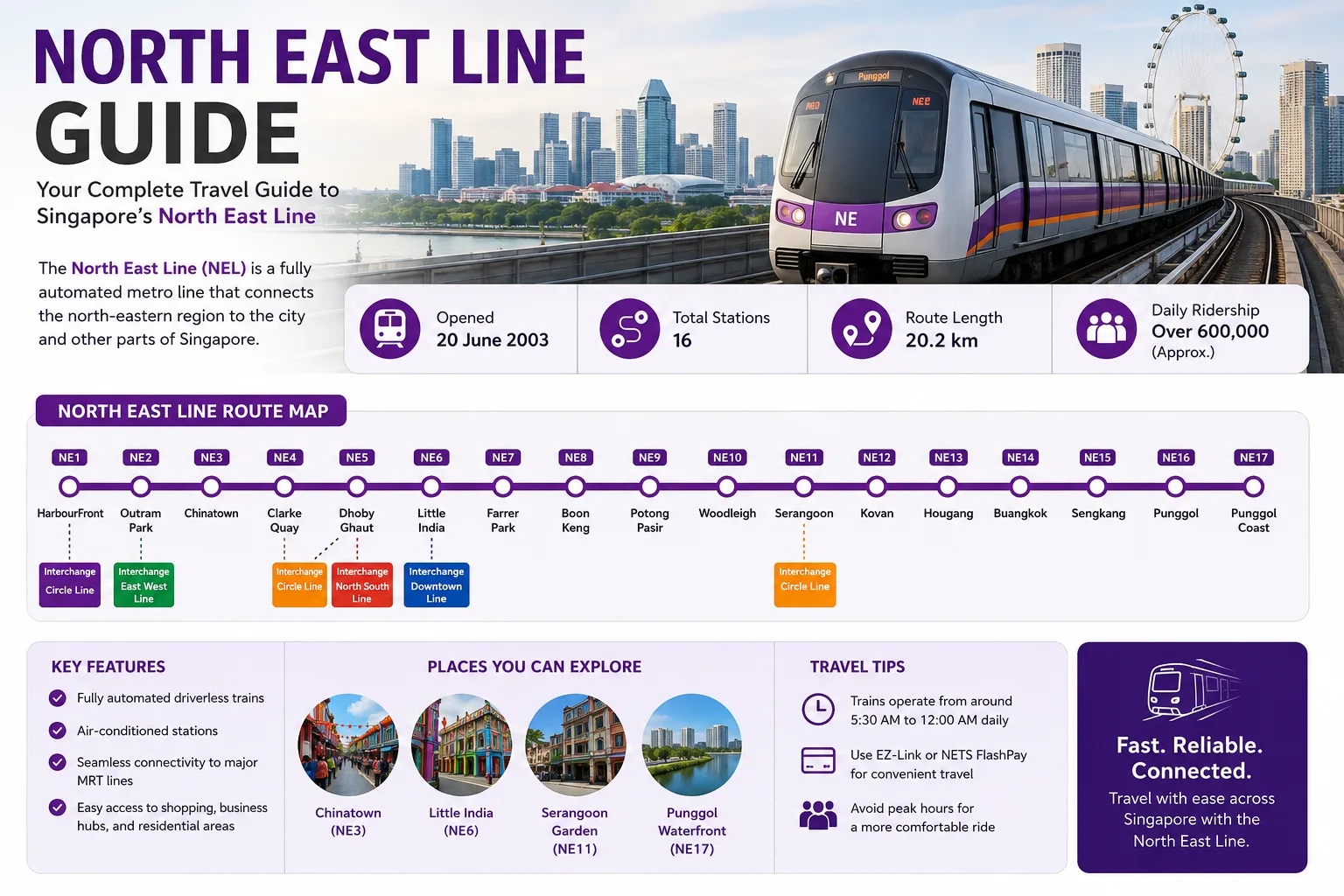
Singapore’s MRT system is one of the easiest ways to explore the city, and the North East Line Guide is a useful companion for anyone travelling across the northeast side of Singapore. Opened in 2003, the North East Line (NEL) was Singapore’s first fully automated underground MRT line. It connects Punggol in the northeast to HarbourFront in the south, making daily commutes smoother for residents, students, workers, and tourists.
The purple MRT line may look simple on the map, but there’s plenty happening along the route. From heritage neighbourhoods and shopping districts to food streets and waterfront attractions, the North East Line passes through some of Singapore’s most interesting areas.
Whether you’re a first-time visitor planning your itinerary or a local trying to understand the stations better, this guide covers the important details — stations, connections, attractions, travel tips, and what makes this MRT line special.
1. What Is the North East Line?
The North East Line, commonly known as the NEL, is one of Singapore’s six MRT lines. It is operated by SBS Transit and runs between Punggol Station and HarbourFront Station.
The line is easily recognised by its purple colour on MRT maps.
Unlike older MRT routes, the NEL was designed as a completely underground automated railway. There are no drivers operating the trains, allowing for efficient scheduling and smooth operations throughout the day.
The line serves important residential towns such as:
- Punggol
- Sengkang
- Hougang
- Serangoon
- Kovan
- Boon Keng
- Potong Pasir
It also provides direct access to major destinations like:
- Little India
- Chinatown
- Clarke Quay
- HarbourFront
- Sentosa Gateway
The North East Line is especially popular among commuters who need convenient connections between northeastern residential areas and the city centre.
2. North East Line Stations List
The North East Line currently has 16 stations. Here is the complete route from north to south:
| Station | Code | Nearby Highlights |
|---|---|---|
| Punggol | NE17 | Waterway Point, Punggol Waterway |
| Sengkang | NE16 | Compass One, Sengkang Town Centre |
| Buangkok | NE15 | Hougang neighbourhood |
| Hougang | NE14 | Hougang Mall, food areas |
| Kovan | NE13 | Heartland Mall, Upper Serangoon |
| Serangoon | NE12 | NEX Shopping Mall |
| Lorong Chuan | NE11 | Residential areas, schools |
| Bartley | NE10 | Bartley neighbourhood |
| Woodleigh | NE11? | The Woodleigh Mall |
| Potong Pasir | NE10? | Residential district |
| Boon Keng | NE9 | Bendemeer, food spots |
| Farrer Park | NE8 | City fringe attractions |
| Little India | NE7 | Heritage district |
| Dhoby Ghaut | NE6 | Orchard Road connection |
| Clarke Quay | NE5 | Riverside attractions |
| Chinatown | NE4 | Heritage and dining |
| Outram Park | NE3 | Medical district |
| HarbourFront | NE1 | VivoCity, Sentosa |
Note: Station codes follow MRT naming conventions and may change with future network expansions.
The route covers a mix of suburban neighbourhoods and busy city destinations, which is one reason the NEL remains heavily used every day.
3. Best Attractions Along the North East Line
One of the best things about travelling on the NEL is that many stations are close to popular attractions.
Punggol: Waterfront Views and Family Activities
Starting from the northeast, Punggol offers a refreshing escape from the busy city. Visitors can explore Punggol Waterway Park, enjoy cycling paths, or relax near the waterfront.
Families often visit the area because it has open spaces, playgrounds, and shopping options like Waterway Point.
Serangoon: Shopping and Food Paradise
Serangoon Station connects directly to NEX, one of Singapore’s largest suburban shopping malls.
You’ll find:
- Restaurants
- Supermarkets
- Entertainment options
- Retail stores
For residents nearby, NEX is almost like a second town centre.
Little India: Culture, Food and Heritage
Little India Station brings travellers straight into one of Singapore’s most colourful neighbourhoods.
Visitors can explore:
- Traditional Indian restaurants
- Textile shops
- Heritage buildings
- Temples
- Street markets
It’s a great stop if you want a different side of Singapore beyond modern skyscrapers.
Clarke Quay: Riverside Nightlife
Clarke Quay is one of the most recognisable stops along the NEL. The area is famous for its riverside dining, nightlife, and historic warehouses.
During the evening, the atmosphere changes completely — bright lights, restaurants, music, and crowds enjoying the waterfront.
HarbourFront: Gateway to Sentosa
HarbourFront is one of the busiest stations on the line.
It connects visitors to:
- VivoCity
- Sentosa Island
- Cable car attractions
- Cruise terminals
For tourists, this station is often the final stop before a day of entertainment.
4. North East Line Interchange Stations
The NEL connects with several other MRT lines, making transfers convenient.
Important interchange stations include:
Dhoby Ghaut Station
Connects with:
- North South Line
- Circle Line
This station is useful for reaching Orchard Road, museums, and central Singapore.
Serangoon Station
Connects with:
- Circle Line
It provides easier access to areas like Bishan, Buona Vista, and HarbourFront via alternative routes.
Outram Park Station
Connects with:
- East West Line
- Thomson-East Coast Line
It is especially important for commuters travelling to the Central Business District and medical facilities.
HarbourFront Station
Connects with:
- Circle Line
This makes travelling around southern Singapore much easier.
5. North East Line Operating Hours and Frequency
The North East Line generally operates from early morning until around midnight.
Typical timings:
- First trains: Around 5:30 AM
- Last trains: Around midnight
However, operating hours may change during:
- Public holidays
- Special events
- Maintenance periods
Train frequency is usually shorter during peak hours, helping large crowds move efficiently.
Morning and evening peak periods can get crowded, especially around interchange stations. If you prefer a quieter journey, travelling outside peak hours is usually more comfortable.
6. North East Line Travel Tips for Visitors
A little planning can make your MRT journey much easier.
Use an EZ-Link Card or Contactless Payment
Visitors can pay using:
- EZ-Link cards
- NETS cards
- Contactless bank cards
- Tourist passes
This avoids buying individual tickets for every trip.
Check Station Exits Before Leaving
Large stations like HarbourFront and Dhoby Ghaut have multiple exits. Choosing the wrong one can mean extra walking.
A quick map check saves time.
Avoid Peak Hours When Possible
The busiest periods are usually:
- 7:30 AM to 9:30 AM
- 5:30 PM to 7:30 PM
If you’re sightseeing, late mornings and afternoons are often more relaxed.
Explore Beyond the City Centre
Many visitors only stop at Chinatown or Clarke Quay, but the heartland stations have plenty to offer too.
Try exploring:
- Punggol’s waterfront areas
- Hougang’s food spots
- Serangoon’s shopping scene
You might find some hidden gems.
7. Why the North East Line Is Important to Singapore
The North East Line changed how people travelled between the northeastern estates and the city.
Before its opening, many residents depended more heavily on buses. The MRT connection reduced travel times and helped these neighbourhoods grow.
Today, the NEL supports thousands of daily journeys. It connects homes, workplaces, schools, shopping areas, and tourist attractions in one convenient route.
It also reflects Singapore’s focus on efficient public transport planning. More than just a railway line, it has become part of everyday life for many commuters.
Final Thoughts: Why This North East Line Guide Is Useful
The North East Line Guide shows that the purple MRT route is much more than a way to get from one place to another. It links residential towns, cultural districts, shopping areas, and major attractions across Singapore.
From the peaceful waterfronts of Punggol to the lively streets of Chinatown and HarbourFront, the NEL offers a convenient way to experience different sides of the city.
For daily commuters, it provides reliability. For visitors, it opens the door to exploring Singapore without the hassle of driving or navigating complicated roads.
So next time you see the purple line on the MRT map, don’t just think of it as transport. Think of it as a route filled with places waiting to be explored.