
 By Global Arena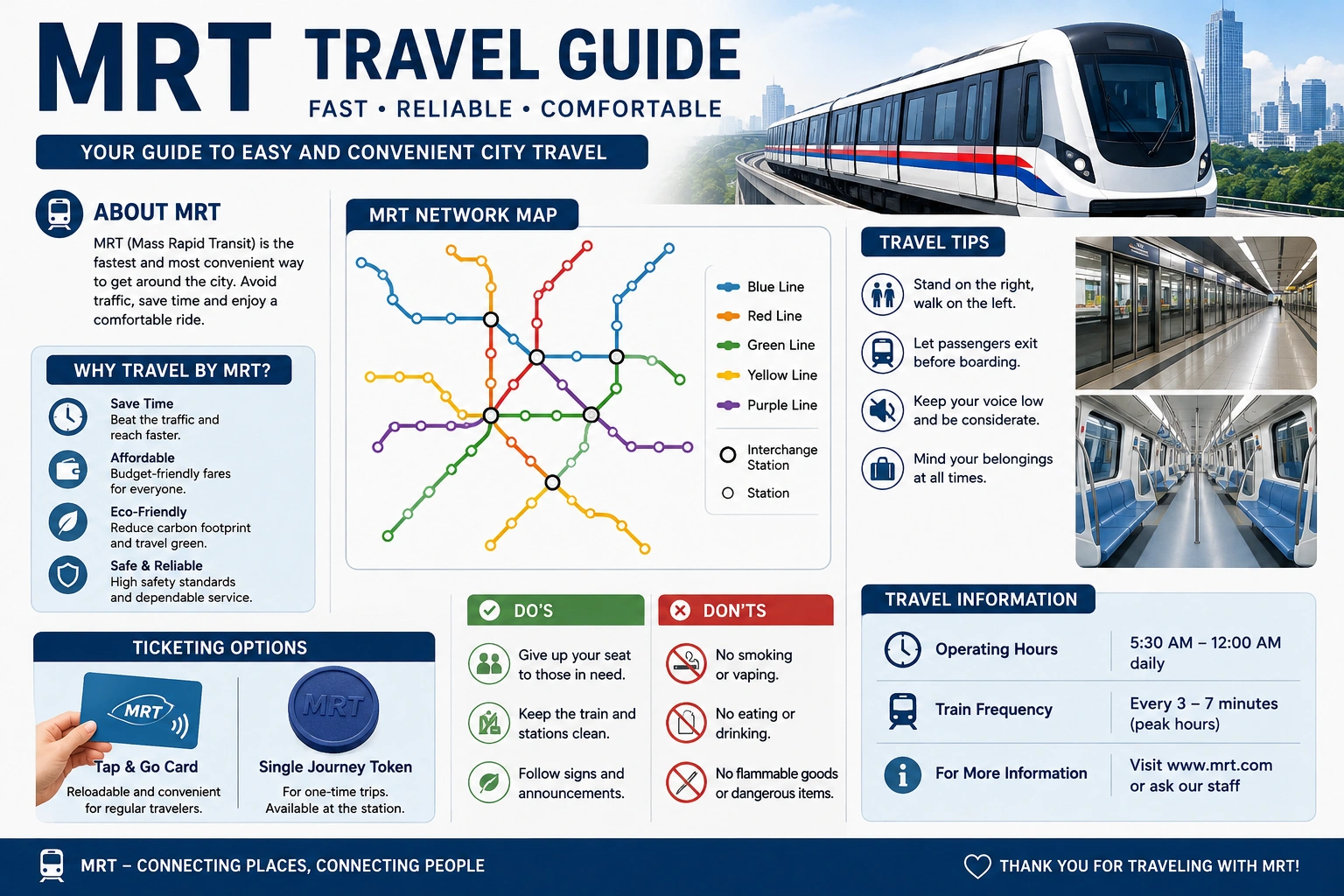
Singapore MRT is one of the easiest ways to travel around the city, whether you are visiting for a short holiday or living in Singapore. The MRT network connects major shopping areas, business districts, tourist attractions, residential neighbourhoods and transport hubs. For most visitors, it is also a practical alternative to taxis because trains are frequent and stations are well connected.
This MRT Travel Guide Singapore explains how the system works, how to choose the right MRT line, how to pay for your journey, where to change trains and which stations are useful for popular attractions. It also covers MRT travel from Changi Airport, operating hours, peak periods and simple tips that can make your journey easier.
Singapore MRT at a Glance
Singapore’s rail network includes several MRT lines along with LRT services. The main MRT lines serve different parts of the island and meet at interchange stations, allowing passengers to change trains without needing to travel by road.
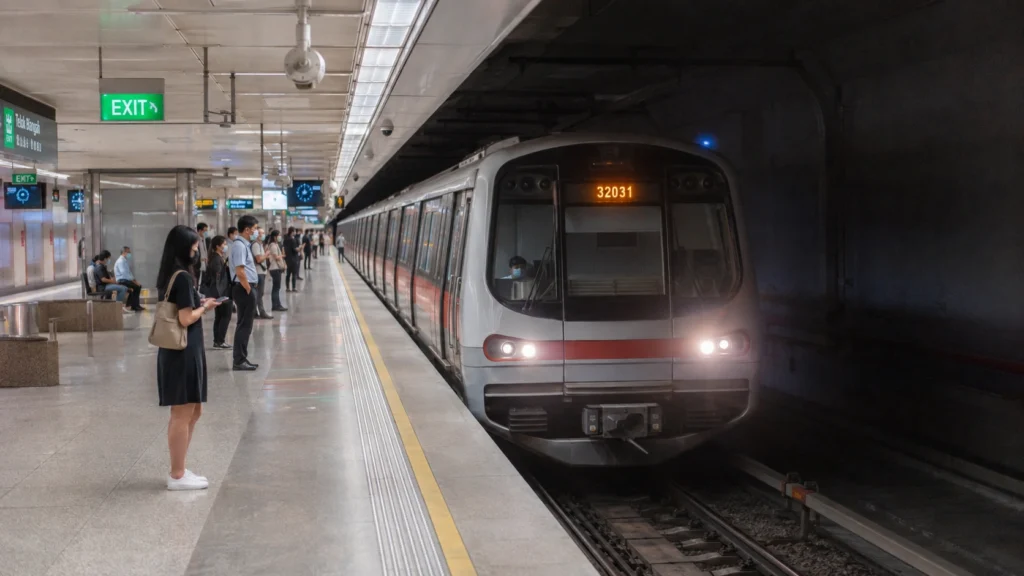
The Land Transport Authority states that train services generally operate from around 5:30am to around midnight daily, although hours can be extended during festive periods. Train frequency is typically around 2–3 minutes during peak periods and about 5–7 minutes outside peak times.
For visitors, the most important thing is not memorising every station. Instead, understand the line colours, major interchanges and the station closest to your destination.
MRT Lines at a Glance
| MRT Line | Main Areas Served | Useful Tourist Areas | Major Interchanges |
|---|---|---|---|
| North-South Line | North to central Singapore | Orchard, City Hall | Dhoby Ghaut, City Hall, Jurong East |
| East-West Line | East to west Singapore | Changi Airport connection, City Hall | Tanah Merah, City Hall, Outram Park |
| North East Line | North-east to HarbourFront | Chinatown, Little India, HarbourFront | Dhoby Ghaut, Outram Park, Serangoon |
| Circle Line | Central and southern areas | Marina Bay, Botanic Gardens, HarbourFront | Dhoby Ghaut, Bishan, Paya Lebar |
| Downtown Line | Downtown and central areas | Bugis, Chinatown, Marina Bay area | Bugis, Newton, Little India |
| Thomson-East Coast Line | North to east | Orchard, Marina Bay, East Coast | Orchard, Marina Bay, Outram Park |
Station and line information can change as the network develops, so travellers should check the current network map before starting a journey. LTA provides an interactive rail network map, while SMRT also provides station information and facilities.
How to Use the Singapore MRT
Using the MRT can seem confusing on your first visit, especially when you arrive at a large interchange. Once you understand the basic process, travelling becomes much easier.
1. Find Your Starting Station
First, identify the MRT station closest to your hotel, home or current location. Many hotels and tourist attractions have more than one nearby station, so compare the walking distance before choosing your route.
2. Check Your Destination
Look for your destination station on the MRT map or journey planner. You don’t always need a direct train. Singapore’s MRT system is designed around interchanges, so changing trains is normal.
3. Follow the Line Direction
Each train travels towards a specific terminal station. Instead of simply looking for the line name, check the direction shown on station signs.
For example, if you are travelling along the North-South Line, the platform signs will show the direction of travel. Always check the final destination displayed on the sign before boarding.
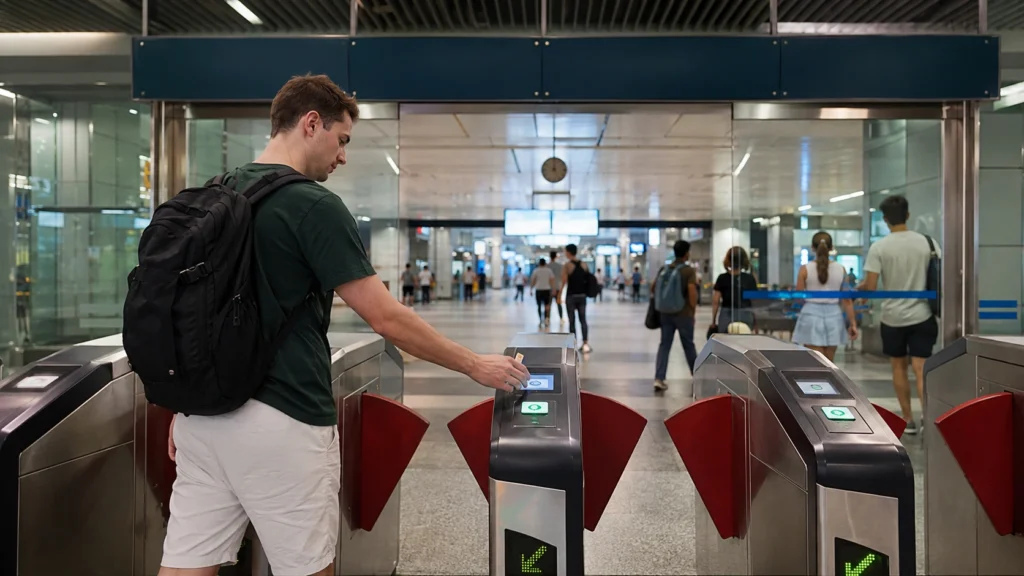
4. Tap In and Tap Out
Passengers need to use an accepted payment method at the fare gates when entering and leaving the station.
LTA says passengers can use SimplyGo EZ-Link and other accepted stored-value cards. Adult passengers can also use contactless Visa, Mastercard, American Express and NETS contactless bank cards, including supported mobile wallets.
5. Change Trains When Needed
If your destination is on another line, follow signs for the interchange. Large stations can involve a reasonable amount of walking, so don’t assume that changing trains takes only a few seconds.
6. Exit at the Correct Station
Once you arrive, follow the signs for the correct exit. This matters in central Singapore because one station can have several exits leading to different streets, malls and attractions.
Singapore MRT Fares and Payment Methods
One of the common questions from visitors is how much Singapore MRT costs. Fares are generally based on the distance travelled rather than a flat price for every journey.
The easiest option for many travellers is to use an accepted contactless bank card. LTA confirms that adult fares can be paid using supported contactless credit or debit cards, including Visa, Mastercard, American Express and NETS contactless cards. Mobile wallets are also supported for eligible cards.
Singapore also offers the Singapore Tourist Pass, which provides unlimited travel on basic bus services and trains during its validity period. Whether it is worthwhile depends on how frequently you plan to use public transport.
Which Payment Option Should Tourists Choose?
For a short trip, contactless payment can be convenient because you don’t need to keep buying individual tickets. If you plan to use public transport heavily throughout your stay, compare the cost of a tourist pass with normal pay-per-ride fares.
Single-trip tickets have been phased out since March 2022, so visitors should not plan their MRT travel around buying traditional one-way paper tickets.
MRT Operating Hours in Singapore
Singapore MRT services generally run from about 5:30am until around midnight. However, the exact first and last train times can vary between lines and stations.
Special occasions can also affect operating hours. During major festive periods, train services may be extended. For example, SMRT has published special late-night train extensions for events such as Chinese New Year and Hari Raya periods.
If you are travelling late at night, check the latest service information rather than relying on a fixed timetable.
This is particularly important if you have a late flight, dinner reservation or attraction visit planned.
Best MRT Stations for Tourists
Some stations are especially useful because they are close to major attractions, shopping streets, cultural districts and entertainment areas.
Orchard
Orchard is one of Singapore’s best-known shopping areas. The surrounding MRT stations provide convenient access to shopping malls, restaurants and hotels along Orchard Road.
City Hall
City Hall is useful for central Singapore attractions and shopping areas. It also connects with the East-West Line and North-South Line, making it an important interchange.
Bugis
Bugis is a popular choice for visitors interested in shopping, food and cultural attractions. The area combines modern malls with older streets and markets.
Chinatown
Chinatown station is useful for visitors exploring temples, traditional shops, restaurants and the wider Chinatown district.
Little India
Little India station provides access to one of Singapore’s most distinctive cultural neighbourhoods, with Indian restaurants, shops, temples and colourful streets.
HarbourFront
HarbourFront is particularly useful for travellers heading towards Sentosa and the southern waterfront area.
Bayfront
Bayfront is a convenient station for Marina Bay attractions, including Marina Bay Sands and Gardens by the Bay.
MRT From Changi Airport to Singapore City
For many international visitors, the first MRT journey begins at Changi Airport.
Changi Airport MRT Station is connected to the airport and provides access to Singapore’s wider rail network. Travellers heading towards central Singapore typically use the airport connection and transfer at Tanah Merah before continuing on the East-West Line.
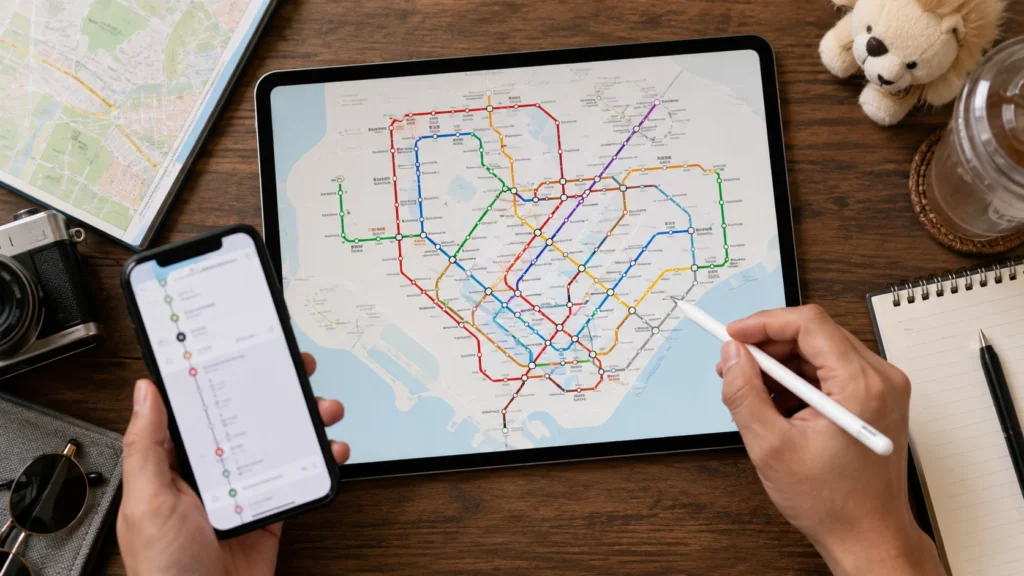
The exact route depends on your final destination. If your hotel is near Orchard, City Hall, Bugis, Chinatown or another central area, check the journey planner before leaving the airport.
If you have heavy luggage, also consider the number of transfers and walking distance. A route with one extra minute on the train may not always be the easiest option if it involves a long interchange.
MRT to Popular Singapore Attractions
Singapore MRT makes it possible to reach many of the city’s best-known attractions without relying on taxis.
| Attraction | Useful MRT Station | MRT Line(s) | Why It Is Useful |
| Marina Bay Sands | Bayfront | Circle / Downtown | Direct access to Marina Bay area |
| Gardens by the Bay | Bayfront | Circle / Downtown | Convenient for Gardens entrance areas |
| Orchard Road | Orchard | North-South / Thomson-East Coast | Shopping and hotels |
| Chinatown | Chinatown | North East / Downtown | Food, temples and heritage streets |
| Little India | Little India | North East / Downtown | Cultural attractions and restaurants |
| Sentosa | HarbourFront | North East / Circle | Gateway to Sentosa |
| Botanic Gardens | Botanic Gardens | Circle / Downtown | Easy access to gardens |
| Bugis | Bugis | East-West / Downtown | Shopping and cultural district |
| Singapore Flyer | Promenade | Circle / Downtown | Marina Bay attractions |
| Clarke Quay | Clarke Quay | North East | Riverside dining and nightlife |
The nearest station is not always directly outside an attraction. Some destinations involve a short walk after leaving the MRT station, so check the correct station exit before starting your journey.
Peak Hours on Singapore MRT
The busiest periods are usually weekday morning and evening commuting times. LTA notes that peak train frequency can be around 2–3 minutes, while off-peak frequency is generally around 5–7 minutes.
For tourists, travelling outside the busiest periods can make the experience more comfortable.
If you are carrying luggage, a stroller or shopping bags, avoid changing trains during the busiest periods when possible.
Weekends can also be busy around popular shopping and tourist areas, even though normal office commuting is lower.
Singapore MRT Interchange Stations
Interchange stations are places where passengers can change from one MRT line to another. They are essential when planning longer journeys.
Some important interchanges include:
- Dhoby Ghaut – connects North-South, North East and Circle lines.
- City Hall – connects North-South and East-West lines.
- Outram Park – connects East-West, North East and Thomson-East Coast lines.
- Bugis – connects East-West and Downtown lines.
- Marina Bay – connects North-South, Circle and Thomson-East Coast lines.
- Newton – connects North-South and Downtown lines.
- Serangoon – connects North East and Circle lines.
- Paya Lebar – connects East-West and Circle lines.
When changing trains, follow the coloured line signs rather than relying only on station names.
Singapore MRT Travel Tips for First-Time Visitors
Check the Entire Route Before Leaving
Don’t only check your starting and final stations. Look at where you need to change lines and which exit you should use.
Save Your Hotel Address
Keep your hotel name and address on your phone. If you get off at the wrong exit, you can use the address to identify the best way back.
Look at Station Exit Numbers
Large stations can have many exits. Choosing the wrong one can add several minutes to your walk.
Keep Your Payment Method Consistent
If you use a contactless bank card to enter, use the same card or device to exit. Avoid switching between a physical card and mobile wallet during the same journey.
Check Service Updates
Planned maintenance and service adjustments can occasionally affect train journeys. SMRT publishes maintenance schedules and service announcements, while LTA recommends checking current transport information when planning a journey.
Allow Extra Time for Interchanges
A journey planner may show a short transfer, but large MRT stations can involve long corridors, escalators and multiple levels.
Stand Clear of Train Doors
Let passengers leave the train before boarding. During busy periods, this makes boarding faster and reduces congestion.
Singapore MRT vs Taxi and Bus
The MRT is usually the first option to consider for longer journeys through central Singapore, but it is not always the best choice.
Buses can be useful when your destination is far from an MRT station. Taxis and ride-hailing services can be more convenient when travelling with several bags, young children or a group.
For many tourists, combining MRT and walking is the most practical approach.
For example, you might take the MRT to Chinatown and then explore nearby attractions on foot instead of taking another vehicle for every short journey.
Is Singapore MRT Good for Tourists?
Yes. Singapore MRT is generally one of the most practical public transport choices for visitors because the network connects many major tourist areas and interchanges make it possible to travel across the city without needing a car.
The main challenge for first-time visitors is understanding the station layout and transfer points. Once you know your line, direction and exit, the system becomes much easier to navigate.
The best approach is to plan each journey around the nearest station, correct line, interchange and station exit rather than simply searching for the destination name.
Frequently Asked Questions
How do tourists use MRT in Singapore?
Tourists can use accepted contactless bank cards, supported mobile wallets, EZ-Link options or other approved fare methods. Check your route, tap in, take the correct train and tap out at your destination.
How much does MRT cost in Singapore?
MRT fares are distance-based, so the amount depends on the journey. Use the official journey planner or fare information for the current fare before travelling.
What time does Singapore MRT start?
Train services generally begin around 5:30am and run until around midnight, although exact timings vary and may be extended during special periods.
Can tourists use contactless cards on Singapore MRT?
Yes. LTA states that adult passengers can use supported contactless Visa, Mastercard, American Express and NETS bank cards, as well as eligible mobile wallets.
Which MRT station is best for tourists?
There is no single best station. Orchard, City Hall, Bugis, Chinatown, Bayfront, HarbourFront and Little India are among the most useful depending on your itinerary.
Is Singapore MRT better than taking a taxi?
For many journeys, MRT is cheaper and practical, especially when travelling between major areas. A taxi can be more convenient for late-night travel, heavy luggage or destinations far from an MRT station.
Final Thoughts
A good MRT Travel Guide Singapore should make the network feel simple rather than overwhelming. You don’t need to memorise every station. Start with your destination, find the nearest MRT station, check the line and direction, identify any interchange and confirm the correct exit.
For most visitors, MRT is an easy way to move between Singapore’s shopping districts, cultural neighbourhoods, business areas and major attractions. Keep your payment method ready, allow extra time at large interchanges and check service updates when travelling late.
With a little route planning, Singapore MRT can become one of the easiest parts of your trip.