
 By Global Arena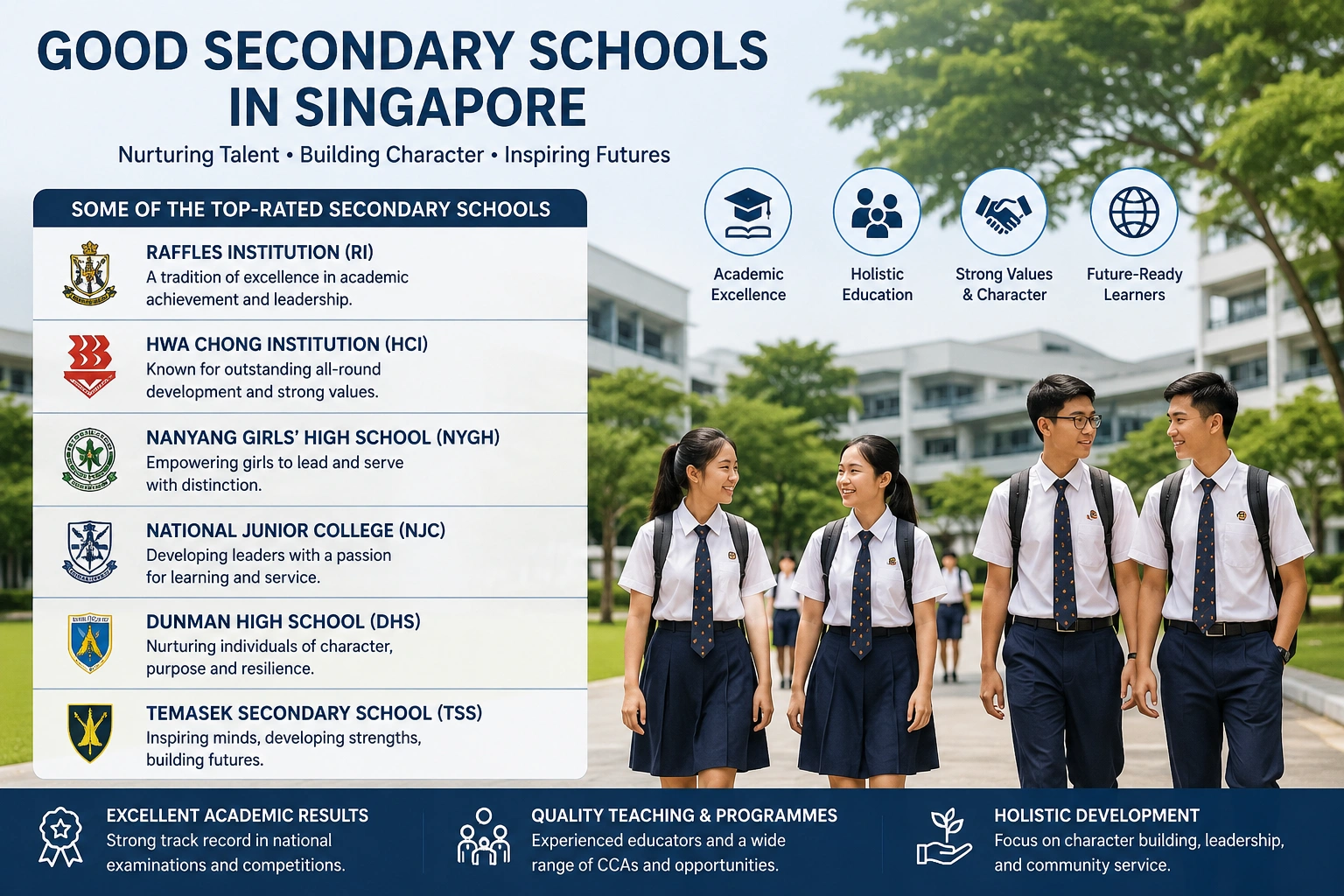
Choosing Good Secondary Schools in Singapore is an important decision after PSLE because the right environment can shape a student’s learning habits, interests, confidence and future choices. Parents often start by checking PSLE scores or past Cut-Off Points, but those figures only show part of the picture. A school may suit one student well and feel less suitable for another.
Academic programmes, subject options, CCAs, school culture and student support all deserve attention. Location matters too, since a long daily commute can affect a student’s routine and energy. Families should also consider whether a school offers opportunities that match the child’s strengths, such as sports, arts, leadership, STEM or language programmes.
This guide looks at the main factors parents can use when comparing secondary schools, from academic pathways and admission considerations to school culture, programmes and everyday student life.

What Makes a Good Secondary School in Singapore?
A good secondary school is not defined by academic results alone. Every student has different strengths, learning preferences and goals, so the right choice should offer a balance between studies and personal development. Parents can look at academic support, subject options, CCAs, school culture, special programmes and available facilities before making a decision. Daily travel is another practical factor that is easy to overlook. A school with excellent programmes may not be the best fit if the journey is tiring or difficult to manage. Most importantly, the school should give the student room to grow in areas that genuinely interest them, whether that means academics, sports, performing arts, leadership or technology.
Academic Programmes and Subject Choices
Academic support remains an important part of school selection. Parents should check the subjects offered, teaching approach and available learning opportunities rather than relying only on a school’s reputation. With Full Subject-Based Banding, students can take different subjects at different levels according to their learning needs and strengths. This makes it useful to check each school’s subject offerings before deciding.
CCAs, Sports, Arts and Leadership
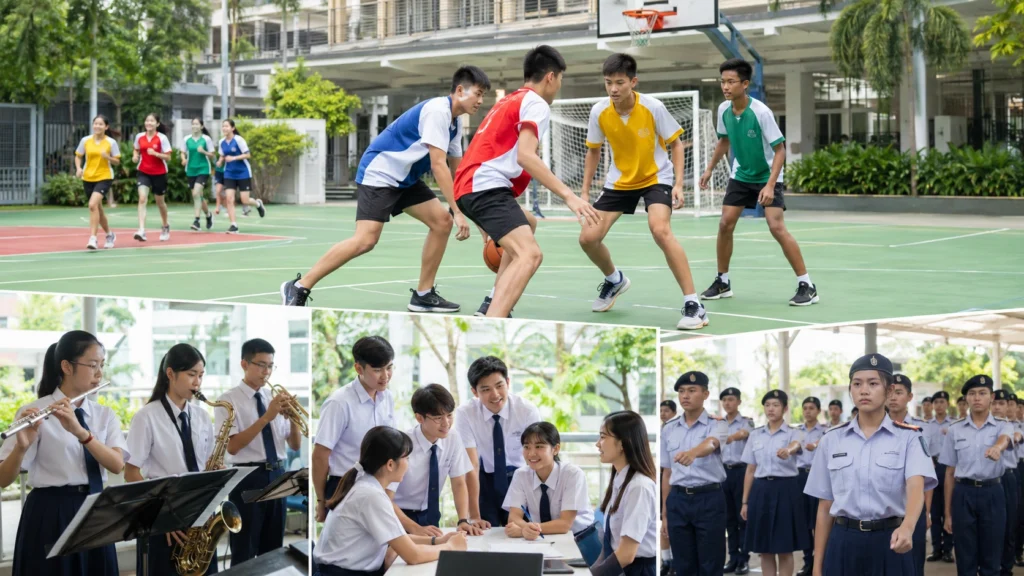
CCAs can shape a student’s secondary school experience beyond the classroom. Schools may offer sports, performing arts, clubs, uniformed groups and leadership activities. A child who already has a strong interest in football, music, drama, robotics or another area may benefit from choosing a school with suitable opportunities. Parents should check the actual CCA choices and participation arrangements instead of assuming that every school offers the same activities.
School Culture and Student Support
School culture affects how comfortable students feel during their daily routine. Parents can learn about the school’s values, student support systems, discipline approach and overall learning environment. Open houses and official school information can give families a better sense of the atmosphere. Facilities also matter, but they should be considered alongside teaching, student support and programmes. Finally, travel time deserves attention. A manageable journey can leave students with more energy for homework, rest, family time and CCAs.
Good Secondary Schools in Singapore to Consider
There is no single list that can decide which school is best for every student. A school known for strong academics may suit a student who enjoys a structured learning environment, while another student may do better in a school with stronger sports, arts or leadership opportunities. That is why it makes more sense to compare schools by their strengths instead of forcing them into a fixed ranking.
Parents can also look beyond exam results when shortlisting Good Secondary Schools in Singapore. Subject choices, special programmes, CCAs, school culture and future pathways can all affect a student’s experience. The schools below are examples of established options that families may research further through their official school information and open houses.
Schools Known for Strong Academic Programmes
Some secondary schools have built strong reputations for academic programmes and challenging learning opportunities. Hwa Chong Institution, Raffles Institution and Nanyang Girls’ High School are often considered by families looking for academically demanding environments. Their programmes can appeal to students who enjoy independent learning, academic competitions and a faster-paced classroom setting.
Eunoia Junior College is also connected with a secondary-to-pre-university pathway through its affiliated secondary schools, giving some students a longer-term route to consider. However, parents should look at the actual programme structure and current admission requirements rather than choosing a school based on reputation alone.
Schools with Strong Sports and CCA Opportunities
For students who spend as much time thinking about their CCA as their next test, school activities deserve serious attention. Schools such as Victoria School, Anglo-Chinese School (Independent) and Dunman High School offer a broad range of co-curricular opportunities.
Sports, performing arts, clubs and uniformed groups can help students build teamwork and confidence while developing skills outside regular lessons. Parents should check the current CCA list, training schedules and participation expectations because these can differ from one school to another.
Schools with Arts, Leadership and Enrichment Programmes
Some students are drawn more strongly to music, drama, visual arts, public speaking, community projects or leadership. In these cases, families should look for schools where these interests have a meaningful place in student life.
Nanyang Girls’ High School, Raffles Girls’ School and Dunman High School are examples worth researching for students interested in a broader mix of academic and enrichment opportunities. The aim should not be to find the school with the longest programme list, but the one where the available opportunities match the student’s interests.
Schools Offering Integrated Programme Pathways
The Integrated Programme can appeal to students who want a longer academic route that leads towards pre-university education without taking the traditional O-Level pathway at the end of secondary school.
Schools such as Raffles Institution, Hwa Chong Institution, Nanyang Girls’ High School, Dunman High School and Anglo-Chinese School (Independent) have established Integrated Programme pathways. Each programme has its own structure, entry requirements and school culture, so parents should compare the details carefully.
| School | Key Strength | Programme/Pathway | Suitable For |
| Hwa Chong Institution | Academic and enrichment opportunities | Integrated Programme | Students seeking a demanding academic environment |
| Raffles Institution | Academic depth and leadership | Integrated Programme | Students interested in academics and leadership |
| Nanyang Girls’ High School | Academics and holistic development | Integrated Programme | Students seeking a broad academic experience |
| Victoria School | Academics, sports and CCAs | Mainstream secondary pathway | Students wanting balanced school life |
| Anglo-Chinese School (Independent) | Academics, sports and activities | Integrated Programme / IB pathway | Students interested in varied academic pathways |
| Dunman High School | Academics, arts and CCAs | Integrated Programme | Students looking for a broad school experience |
| Raffles Girls’ School | Academic and enrichment programmes | Integrated Programme | Students with strong academic and leadership interests |
| Eunoia Secondary School | Academic and co-curricular development | Affiliated pathway with Eunoia JC | Students considering a longer academic pathway |
How PSLE Score Affects Secondary School Choices
The PSLE Score helps determine a student’s Secondary 1 Posting Group and influences which schools may be realistic choices. Students submit their school preferences, while posting also depends on factors such as available places and the order of school choices. Under Full Subject-Based Banding, students enter through Posting Groups 1, 2 or 3 and may take G1, G2 or G3 subjects based on their learning needs and strengths.
Parents often use the Cut-Off Point (COP) to compare schools, but past COPs are only reference figures and can change each year. A school should not be selected by COP alone. Academic programmes, CCAs, school culture, subject options, location and the child’s interests should also be part of the decision.
Understanding G1, G2 and G3 Subjects
G1, G2 and G3 are subject levels under Full Subject-Based Banding. Students may take different subjects at different levels according to their strengths and learning needs.
Why Students Should Not Choose Only by COP
A historical COP does not guarantee admission in a future posting exercise. Parents should use it as a guide while considering the student’s overall school fit and available programmes.
Full Subject-Based Banding and Secondary School Options
Full Subject-Based Banding (Full SBB) gives students more flexibility in secondary school by moving away from fixed academic streams. Students are posted to G1, G2 or G3 and can take subjects at different levels based on their strengths, learning needs and progress. A student may therefore study some subjects at a higher or lower level instead of taking every subject at the same level.
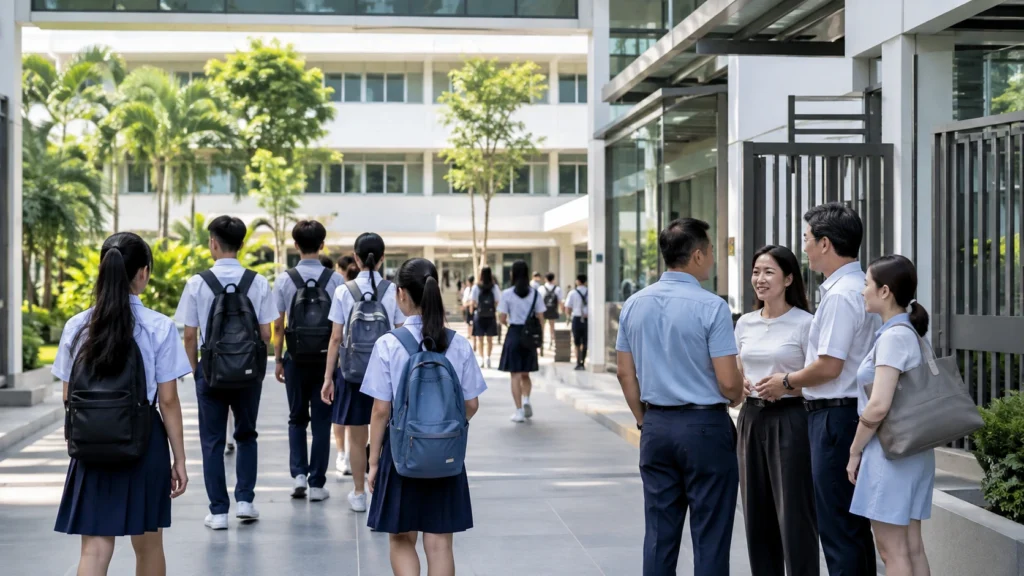
Parents should check each school’s subject offerings, combinations and progression options before making their choices. These can vary between schools, so it is worth comparing the available subjects with the child’s academic strengths, interests and future plans. This can help families find a school with learning options that suit their child.
DSA-Sec and Other Ways to Enter a Secondary School
Direct School Admission–Secondary (DSA-Sec) gives students an opportunity to apply to participating secondary schools based on specific talents and strengths, such as sports, performing arts, leadership or other areas. Unlike the standard PSLE-based Secondary 1 posting route, DSA-Sec focuses on what a student can demonstrate in the selected talent area. Application timing matters because schools have their own selection processes and timelines.
Who May Benefit from DSA-Sec?
DSA-Sec may suit students who have developed a genuine strength in sports, music, performing arts, leadership, or another area offered by a school. A strong interest alone may not be enough; students should be able to show relevant skills, experience or achievements.
What Parents Should Check Before Applying
Parents should check each school’s available DSA-Sec categories, selection criteria, application dates and programme expectations. It is also important to consider whether the school is a good overall fit academically and personally, rather than applying only because the student has a chance through DSA-Sec.
How to Choose the Right Secondary School for Your Child
- Academic fit: Match subjects and learning level with the child’s abilities.
- Interests: Consider sports, arts, STEM, languages or leadership.
- CCAs: Check activities the child enjoys.
- School culture: Look at the learning environment and student support.
- Location: Consider daily travel time.
- Future pathway: Review subjects and progression options.
- Child’s comfort: Make sure the student feels happy with the choice.
For High-Scoring Students
Look for challenging programmes, enrichment opportunities and suitable academic pathways.
For Students with Strong Sports or Arts Skills
Check relevant CCAs, facilities and DSA-Sec opportunities.
For Students Who Need a Balanced School Environment
Prioritise a comfortable mix of academics, CCAs, support and personal development.
Secondary School Comparison Checklist
Before making a final choice, parents should compare a few practical factors instead of focusing only on PSLE scores or COP. This simple checklist can make it easier to identify schools that match the child’s needs.
| Factor | What Parents Should Check | Why It Matters |
| Academic Programmes | Subjects and pathways | Academic fit |
| CCAs | Sports, arts and clubs | Student interests |
| School Culture | Environment and values | Daily experience |
| Location | Travel time | Convenience |
| Facilities | Labs, sports and learning spaces | Student experience |
| Special Programmes | IP, talent and enrichment programmes | Future opportunities |
Common Mistakes When Choosing a Secondary School
Parents can avoid common mistakes by looking beyond scores and reputation:
- Focusing only on COP: Treat past COP as a reference, not a guaranteed admission score.
- Choosing by reputation alone: A well-known school may not match every child’s needs.
- Ignoring the child’s interests: Consider subjects, sports, arts and other strengths.
- Underestimating travel time: A long daily commute can affect the student’s routine.
- Skipping CCA research: Check whether the school offers activities the child enjoys.
- Not checking subject options: Make sure the required subjects and pathways are available.
- Using outdated information: Confirm current admission rules and school programmes before making choices.
FAQs About Good Secondary Schools in Singapore
1. What are the good secondary schools in Singapore?
Good secondary schools vary by student needs. Parents can compare academic programmes, CCAs, school culture, subject options, location and student support.
2. How do I choose a secondary school after PSLE?
Consider the child’s PSLE Score, interests, school programmes, subject choices, CCAs, travel distance and overall school environment.
3. What PSLE score is needed for secondary school?
There is no single PSLE Score required for all schools. Posting depends on the student’s score, school choices and available places.
4. Is COP important when choosing a secondary school?
Yes, historical COP can help parents compare schools, but it is only a reference and can change from year to year.
5. What is Full Subject-Based Banding?
Full Subject-Based Banding allows students to take G1, G2 or G3 subjects according to their strengths, learning needs and progress.
6. What is DSA-Sec?
DSA-Sec allows students to apply to participating secondary schools based on talents such as sports, arts, leadership and other areas.
7. Are independent schools better than government schools?
Not necessarily. The better choice depends on the student’s academic needs, interests, school culture, programmes and family preferences.
8. Should parents choose a school based on academic results?
Academic results matter, but they should be considered alongside CCAs, programmes, student support, culture and the child’s overall fit.
9. Does school location matter?
Yes. A reasonable travel time can make daily school life easier and leave students with more time for rest, homework and activities.
10. How many secondary schools can students choose?
Students can submit multiple school choices during Secondary 1 Posting, allowing families to create a preference list based on their priorities.
Conclusion
Choosing Good Secondary Schools in Singapore should go beyond rankings and past COP figures. Parents should balance PSLE Score with academic programmes, subject choices, CCAs, school culture and travel distance. Most importantly, the school should match the child’s strengths, interests and comfort level.
Before making final choices, families should compare suitable schools and check their current programmes, admission details and subject offerings. The latest information from MOE and individual schools can help parents make a more informed decision.