
 By Global Arena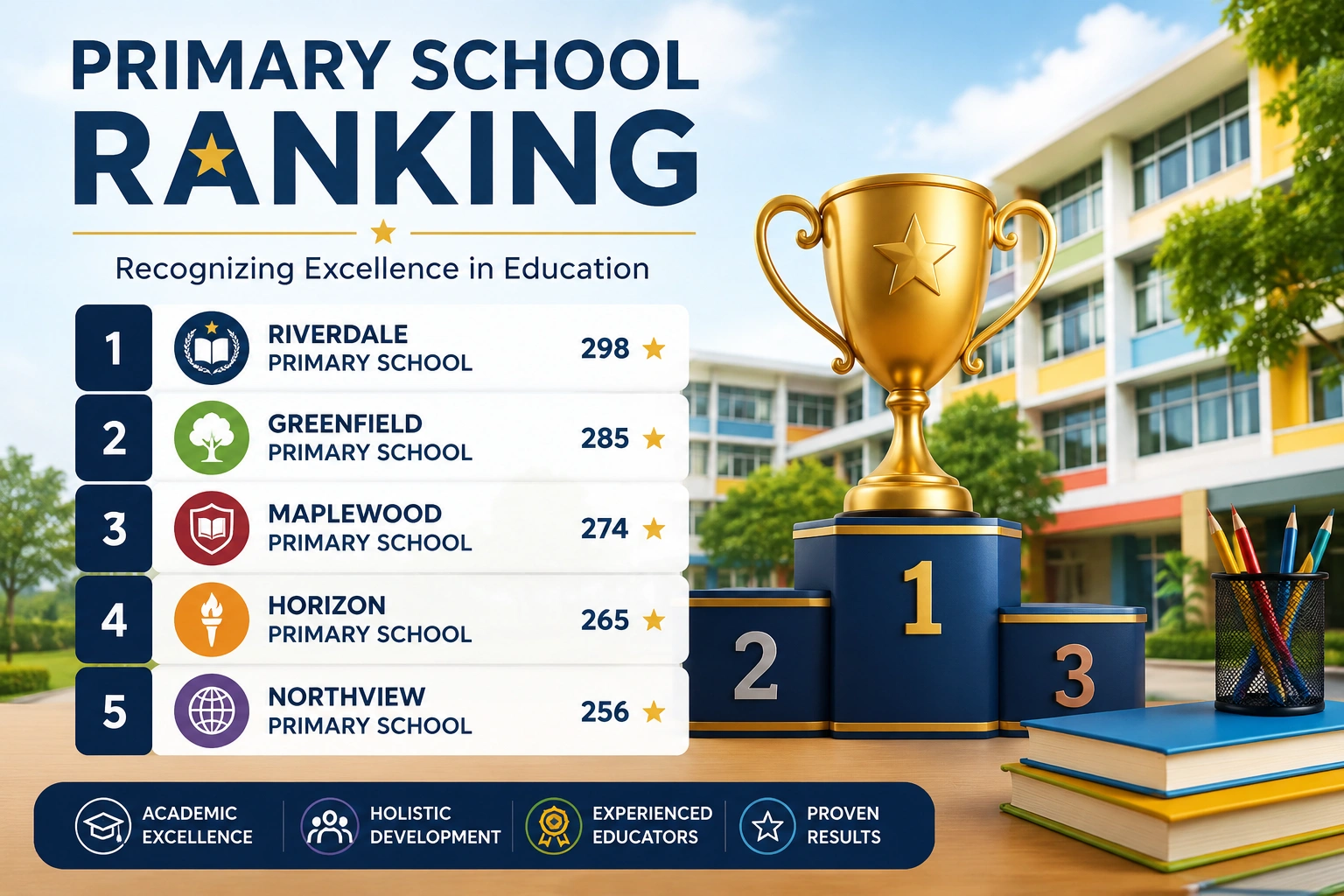
Choosing a primary school is a major decision for families in Singapore, and a Primary School Ranking can give parents a useful starting point when comparing their options. With many schools offering different programmes, activities, locations, and learning environments, it can be difficult to know which factors matter most.
Parents often search for school rankings to understand popularity, academic reputation, admission demand, and the opportunities available to students. However, a higher position does not automatically mean a school is the right choice for every child. Distance from home, school culture, programmes, CCAs, and P1 admission requirements can also play an important role.
This guide explores primary school rankings in Singapore, explains how schools can be compared, and looks at the factors parents should consider before making a shortlist. It also covers P1 registration, admission demand, balloting, and practical school selection tips.
What Is a Primary School Ranking?
A primary school ranking is a way of comparing schools using selected factors such as parent demand, admission data, school programmes, academic reputation, CCAs, location, and student opportunities. There is no single factor that can show whether one school is better for every child. Different rankings may use different data, so the position of a school can vary from one source to another.
Popularity and demand are also not the same as academic performance. A school may attract many applications because of its location, history, programmes, or reputation, while another may have strong academic outcomes without being among the most sought-after schools.
Is There an Official Primary School Ranking in Singapore?
Singapore does not have a single official MOE league table that ranks every primary school from first to last. Independent websites may create comparisons using publicly available information, such as P1 registration demand or balloting data.
Parents should therefore check how a ranking was created, what year the data covers, and which factors were used before relying on it. A ranking works best as a research tool rather than the only basis for choosing a school.
What Factors Affect a Primary School Ranking?
A primary school ranking can use several factors, including P1 registration demand, school vacancies, balloting history, academic environment, programmes, CCAs, special programmes, school culture, location, parent demand, and student development.
P1 demand and past balloting can show how competitive a school is, while vacancies indicate available places. Academic programmes, CCAs, and student development help parents understand the opportunities a school offers. Location also matters because daily travel can affect a child’s routine.
Ranking Methodology
Every ranking should clearly explain which factors are used, what year the data covers, and how schools are compared. Parents should check this methodology before treating a ranking as a reliable guide.
Primary School Ranking Singapore 2026
For this article, the ranking below is not an official MOE league table. It uses 2026 P1 Phase 2B demand and applicant-to-vacancy ratios as a practical measure of school popularity and admission competition. In 2026, 33 schools were oversubscribed in Phase 2B, with 31 requiring balloting.
| Rank | Primary School | Location | Key Strength | Demand Level |
| 1 | Nanyang Primary School | Bukit Timah | SAP, strong demand | Very High |
| 2 | Ai Tong School | Bishan | SAP, established reputation | Very High |
| 3 | Pei Hwa Presbyterian Primary School | Bukit Timah | SAP, strong parent demand | Very High |
| 4 | Holy Innocents’ Primary School | Hougang | SAP, community focus | Very High |
| 5 | Kong Hwa School | Mountbatten | SAP, high demand | Very High |
| 6 | Nan Hua Primary School | Clementi | SAP, bilingual focus | Very High |
| 7 | CHIJ St. Nicholas Girls’ School | Ang Mo Kio | SAP, girls’ education | Very High |
| 8 | Tao Nan School | Marine Parade | SAP, strong demand | Very High |
The figures show why these schools attract attention. In Phase 2B 2026, Nanyang Primary School had 52 applicants for 20 vacancies, while Ai Tong School had 51 applicants for 20 places. Pei Hwa Presbyterian Primary School received 46 applications for 21 vacancies.
Nanyang Primary School had the highest applicant-to-vacancy ratio among the Phase 2B schools, at 2.60 times the available places. Ai Tong School followed at 2.55 times, while Pei Hwa reached 2.19 times. These figures show admission competition, not a formal measure of teaching quality.
Other highly sought-after schools included Holy Innocents’ Primary School, Kong Hwa School, Nan Hua Primary School, CHIJ St. Nicholas Girls’ School and Tao Nan School. Several of these schools also faced balloting for Singapore Citizen applicants living within 1km.

Parents should therefore treat this Primary School Ranking as a demand-based comparison. Before choosing a school, check its programmes, location, admission phase, vacancies and suitability for the child rather than relying on demand figures alone.
Best Primary Schools for Different Needs
A school that ranks highly for demand may not be the best match for every child. Parents should look at the type of learning environment, activities, and programmes that suit their child’s interests and strengths.
Schools for Academic-Focused Students
Parents who place greater emphasis on academics can look at schools with strong learning support, structured programmes, and a focused study environment. Schools such as Nanyang Primary School, Ai Tong School, and Tao Nan School are popular choices, but parents should review each school’s current programmes rather than relying only on reputation. PSLE preparation should also be viewed as part of the wider learning experience.
Schools With Strong Sports & CCAs
CCAs give children opportunities to develop teamwork, discipline, confidence, and new interests. Parents can compare schools based on sports teams, clubs, performing groups, and student activities. The best option depends on whether the child prefers competitive sports, recreational activities, leadership, or group-based clubs.
Schools With Arts, Music & Creative Programmes
For children interested in creativity, look for schools offering opportunities in visual arts, music, drama, dance, and performances. These activities can help students explore their talents while building confidence outside regular classroom learning.
Schools With Special Programmes
Some schools offer programmes such as SAP, language learning, STEM activities, and other school-based initiatives. Parents should check the current programme details and consider whether they match the child’s interests and learning goals.
Does a Higher Primary School Ranking Mean a Better School?
A higher primary school ranking does not automatically mean a school is better for every child.
High Demand Does Not Mean Better Education
High demand shows that many parents are interested in a school, but it does not guarantee stronger teaching or better PSLE results.
Location Can Affect Popularity
A school may receive high demand because of its location, nearby housing areas, reputation, or admission options.
Every Child Has Different Needs
Some children may prefer an academic environment, while others may benefit more from sports, arts, languages, or creative activities.
Compare More Than Rankings
Parents should compare programmes, admission chances, location, CCAs, school culture, and learning environment before making a final decision. A school that suits the child is often more important than its position on a ranking list.
Primary 1 Registration and Admission
Primary 1 registration in Singapore is organised into different phases, with admission priority depending on the child’s eligibility and relationship with the school. Parents should check the latest MOE registration dates and requirements because details can change each year.
P1 Registration Phases
The main phases include Phase 1, Phase 2A, Phase 2B, Phase 2C, and Phase 2C Supplementary.
- Phase 1: Mainly for children with siblings currently studying in the school.
- Phase 2A: Covers eligible children with specific alumni or kindergarten connections and certain parent-related criteria.
- Phase 2B: Includes eligible children with community or school-related links.
- Phase 2C: Open to children who are not eligible for the earlier phases.
- Phase 2C Supplementary: Provides another opportunity when places remain available.
Vacancies and Balloting
Each school has a limited number of P1 places. When applications exceed available vacancies in a registration phase, balloting may be required. The outcome can depend on admission priority and the child’s registered home address.
Admission Priority
Distance from the school can become important when balloting takes place. Singapore Citizens generally receive priority over Permanent Residents under the relevant admission rules, while the registration phase also affects a child’s priority.
Parents should review the latest official MOE information before submitting an application, including available vacancies, registration phases, eligibility requirements, and balloting arrangements.
How Location Can Affect School Choice
Location is an important factor when comparing schools, even when a school has a strong primary school ranking. A school that is far from home may involve a longer daily commute, which can affect a child’s sleep, study time, and after-school activities.
Distance From Home
Parents should check the actual travel distance and consider how it works during busy school mornings. A nearby school can make daily routines easier for both children and parents.
Transport Options
Good access to MRT stations and bus routes can make travelling more convenient. Families living in areas such as Bukit Timah, Bishan, Tampines, Clementi, or Hougang may want to compare schools based on realistic travel times rather than distance alone.
Child’s Routine
A shorter journey can leave children with more time for homework, rest, CCAs, and family activities.
Location vs Ranking
A highly ranked school is not always the most practical choice. Parents should balance school reputation, admission chances, location, transport, and the child’s needs before making a final decision.
How Parents Can Compare Primary Schools
Parents should look beyond a primary school ranking when creating a shortlist. These five factors can make the comparison easier:
1. Check Location
Consider the distance from home, transport options, and daily travel time.
2. Review Admission Information
Check the P1 registration phase, vacancies, eligibility, and possible balloting.
3. Compare School Programmes
Look at academic, enrichment, language, arts, sports, and other programmes.
4. Consider CCAs and Interests
Choose activities that match your child’s interests, strengths, and personality.
5. Check School Culture
Consider the learning environment, school values, student support, and overall atmosphere.
Primary School Selection Checklist
| Factor | What to Check | Why It Matters |
| Location | Distance & transport | Daily routine |
| Admission | Registration & vacancies | Admission chances |
| Programmes | Academic & enrichment | Learning needs |
| CCAs | Sports, arts & clubs | Child’s interests |
| School Culture | Values & environment | Overall fit |
Common Mistakes When Using Primary School Rankings
Parents should not rely on an old primary school ranking without checking the latest data and ranking methodology. School demand, vacancies, and admission patterns can change each year. Academic results are also only one factor; programmes, CCAs, school culture, and student support matter too.

Distance and balloting risks should also be considered before applying. A highly ranked school may not suit every child or family. Parents should think about the child’s interests, learning needs, and daily routine, while keeping several realistic school options instead of focusing on just one popular choice.
FAQs About Primary School Ranking
1. What is the best primary school in Singapore?
There is no single best school for every child. Parents should compare academics, programmes, location, CCAs, and school culture.
2. Is there an official primary school ranking?
Singapore does not have one official MOE league table ranking all primary schools from best to lowest.
3. How are primary schools ranked?
Independent rankings may use factors such as P1 demand, vacancies, academic information, programmes, reputation, and school popularity.
4. Which primary schools are popular in Singapore?
Popular schools can change by year and registration phase. Recent P1 demand and balloting data can help identify highly sought-after schools.
5. Does ranking affect P1 admission?
No. A school’s ranking does not determine admission. Eligibility, registration phase, vacancies, and balloting rules are more relevant.
6. What is P1 balloting?
Balloting is used when applications exceed available places during a registration phase, with priority rules applied to eligible applicants.
7. Does distance matter for primary school admission?
Yes. Home-to-school distance can affect priority during balloting, so parents should check the latest MOE rules.
8. What should parents consider besides ranking?
Consider location, admission chances, programmes, CCAs, school culture, learning environment, and your child’s interests.
9. How can parents check school vacancies?
Parents can check the latest P1 registration and vacancy information published through official MOE channels.
10. When does Primary 1 registration start?
P1 registration normally takes place in phases during the year. Parents should check MOE for the latest dates and eligibility details.
Conclusion
A Primary School Ranking is a useful starting point, but it should not be the only factor in choosing a school. High demand does not always mean better quality. Parents should also compare location, admission chances, programmes, CCAs, school culture, and the child’s needs. Check the latest official information before making a final decision, as vacancies and admission details can change each year.