
 By Global Arena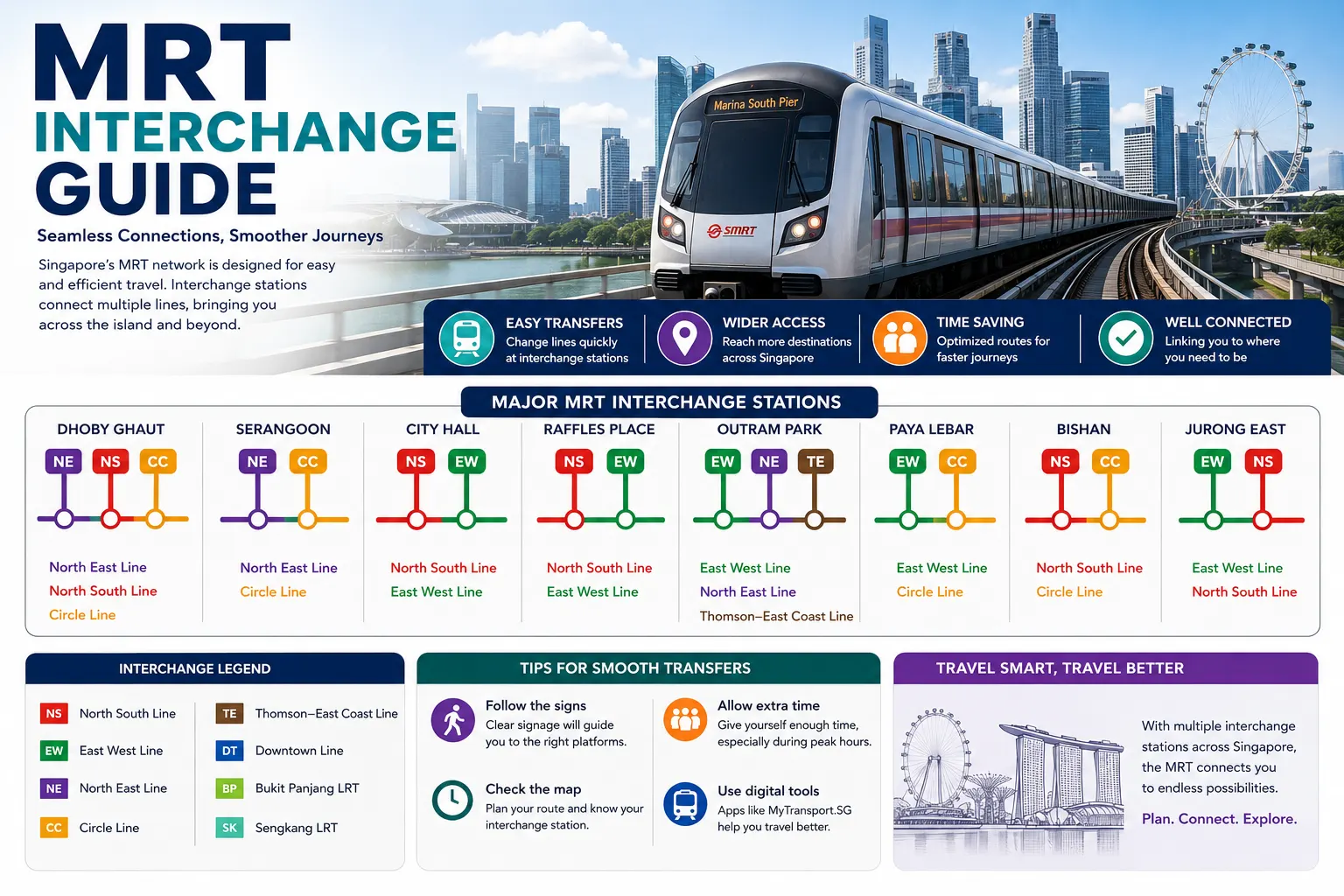
Singapore’s MRT network is famous for being fast, reliable, and incredibly convenient. But with dozens of stations spread across multiple lines, one thing can confuse both new commuters and visitors — knowing where and how to change trains.
That’s where an MRT Interchange Guide becomes useful.
MRT interchange stations are the connecting points where two or more train lines meet, allowing passengers to switch routes without leaving the rail network. Whether you’re travelling from the heart of the city to the suburbs, heading to Changi Airport, or exploring Singapore’s attractions, knowing the right interchange can save time and avoid unnecessary walking.
This guide covers the major MRT interchanges, how they work, and useful tips to make transfers smoother.
What Is an MRT Interchange Station?
An MRT interchange station is a station that connects different MRT lines. Instead of taking a long route around the island, commuters can switch trains at these points to reach their destination faster.
For example, someone travelling from the North-East Line to the Circle Line can change trains at HarbourFront or Dhoby Ghaut instead of making a complicated journey through the city.
Singapore’s MRT system uses interchanges to create a connected transport network. These stations are usually larger, have more passenger facilities, and are designed to handle heavy commuter traffic.
Common features include:
- Multiple platforms and train lines
- Direction signs for easy navigation
- Shopping malls or retail connections nearby
- Bus interchanges in some locations
- More entrances and exits compared to regular stations
A good understanding of interchange stations makes travelling around Singapore much easier.
1. Dhoby Ghaut MRT Interchange — The City Centre Connector
Dhoby Ghaut MRT Station is one of Singapore’s most important MRT interchange stations.
It connects three major lines:
- North-South Line (NSL)
- North-East Line (NEL)
- Circle Line (CCL)
Located in the central area, Dhoby Ghaut is popular among office workers, students, and tourists. It provides easy access to places such as Orchard Road, Plaza Singapura, museums, and government buildings.
The station is quite large, so first-time visitors may need to follow the signs carefully. The walking distance between platforms can feel longer compared to smaller interchanges.
But once you understand the layout, transferring here becomes simple.
2. Bishan MRT Interchange — Connecting North and Circle Routes
Bishan MRT Station connects:
- North-South Line
- Circle Line
Bishan is a key interchange for commuters travelling between northern Singapore and central districts.
The station serves residential areas, schools, and nearby attractions like Junction 8 shopping mall. Many passengers use Bishan when travelling towards places such as HarbourFront, Buona Vista, or Marina Bay.
One advantage of Bishan is that the transfer route is relatively straightforward compared to some larger city interchanges.
3. Jurong East MRT Interchange — The Western Transport Hub
Jurong East MRT Station is one of the busiest MRT interchanges in western Singapore.
It connects:
- North-South Line
- East-West Line
Jurong East is an important gateway for people travelling between the west and central areas.
Nearby attractions include:
- JEM shopping mall
- Westgate
- JCube area
- Jurong Regional Centre
Many commuters transfer here when travelling from places like Woodlands, Choa Chu Kang, Clementi, and Tuas.
The station can become crowded during peak hours, especially in the morning and evening. Giving yourself a few extra minutes for transfers is a good idea.
4. HarbourFront MRT Interchange — Gateway to Sentosa
HarbourFront MRT Station connects:
- North-East Line
- Circle Line
This interchange is especially popular with tourists because it connects directly to VivoCity and Sentosa attractions.
Passengers can easily reach:
- Resorts World Sentosa
- Universal Studios Singapore
- Sentosa Island
- Cruise terminals
HarbourFront can be very busy on weekends and public holidays. Still, the station is well organised, with clear signs guiding passengers toward different exits.
5. Paya Lebar MRT Interchange — East Singapore Connection
Paya Lebar MRT Station connects:
- East-West Line
- Circle Line
This interchange serves commuters from eastern Singapore and provides access to Paya Lebar Quarter (PLQ), a popular lifestyle and business district.
The area has:
- Shopping malls
- Office buildings
- Dining options
- Residential developments
For many east-side residents, Paya Lebar is a convenient transfer point when travelling towards areas like Buona Vista, HarbourFront, or the city centre.
6. MacPherson MRT Interchange — Linking Downtown and Circle Routes
MacPherson MRT Station connects:
- Circle Line
- Downtown Line
This interchange is useful for commuters travelling between eastern neighbourhoods and areas such as Bukit Panjang, Bugis, and Marina Bay.
The Downtown Line has made MacPherson more accessible, reducing travel times for many residents.
The station is smaller compared to major hubs like Dhoby Ghaut, making transfers less overwhelming.
7. Bugis MRT Interchange — Downtown Access Point
Bugis MRT Station connects:
- East-West Line
- Downtown Line
Bugis is one of Singapore’s most popular lifestyle areas.
Nearby attractions include:
- Bugis Junction
- Bugis Street
- Arab Street
- Haji Lane
Tourists often use this interchange because it provides easy access to shopping, food, and cultural attractions.
During weekends, expect larger crowds. The area is lively — and that’s part of its charm.
8. Newton MRT Interchange — Connecting Orchard and Downtown Areas
Newton MRT Station connects:
- North-South Line
- Downtown Line
Newton is well known for its food scene, especially the famous Newton Food Centre.
The interchange also provides convenient access to Orchard Road, Novena, and Bukit Timah areas.
For travellers staying near the city centre, Newton can be a useful station for exploring Singapore without relying on taxis.
9. Marina Bay MRT Interchange — Central Business District Link
Marina Bay MRT Station connects:
- North-South Line
- Circle Line
- Thomson-East Coast Line
This interchange serves Singapore’s central business district and Marina Bay area.
Nearby locations include:
- Marina Bay Sands
- Gardens by the Bay
- Financial district buildings
With multiple MRT lines connecting here, Marina Bay has become an important transfer point for both workers and tourists.
10. Woodlands MRT Interchange — Northern Singapore Gateway
Woodlands MRT Station connects:
- North-South Line
- Thomson-East Coast Line
Woodlands plays an important role in connecting northern Singapore with the rest of the island.
It is also close to Woodlands Checkpoint, making the area popular among travellers heading towards Malaysia.
The Thomson-East Coast Line connection has improved accessibility for residents in the north.
Tips for Using Singapore MRT Interchanges
Even with Singapore’s excellent transport system, interchange stations can feel confusing at first. These simple tips help:
Follow Platform Signs
Large interchange stations have many signs. Check the line colour and destination before walking.
Allow Extra Walking Time
Some transfers involve underground walkways or escalators. Stations like Dhoby Ghaut and Marina Bay require more walking.
Avoid Peak Hours When Possible
Morning peak hours and evening rush hours can make major interchanges crowded.
Use MRT Apps
Transport apps can show the fastest routes, transfer points, and estimated travel time.
Check Exit Numbers
Some stations have many exits. Choosing the wrong one can add several minutes to your journey.
Why MRT Interchanges Matter for Daily Travel
Singapore’s MRT interchanges are more than just transfer points. They connect communities, business districts, shopping areas, and tourist attractions across the island.
A commuter living in the east can easily reach the west. A tourist staying downtown can explore neighbourhoods far away without worrying about driving directions.
The network works because these interchange stations create flexibility. You don’t always need the nearest direct train route — sometimes the smartest journey involves one simple transfer.
Final Thoughts on MRT Interchange Guide
Understanding Singapore’s MRT interchange stations can completely change the way you travel. Instead of seeing transfers as confusing, you can use them as shortcuts to reach destinations faster.
From Dhoby Ghaut’s three-line connection to HarbourFront’s tourist-friendly location and Jurong East’s western hub, each interchange plays an important role in keeping Singapore moving.
Whether you’re a daily commuter, a first-time visitor, or someone exploring the city, this MRT Interchange Guide helps you navigate the network with more confidence.
A little planning before your trip goes a long way — and once you get familiar with the system, Singapore’s MRT becomes one of the easiest transport networks in the world to use.