
 By Global Arena
Choosing a primary school is an important decision for families in Singapore. Parents often look at school reputation, location, academic environment, special programmes, facilities, and Primary 1 registration demand before deciding where to apply.
This is why searches for Singapore primary school ranking remain popular among parents who want an easier way to compare schools.
However, there is one important point to understand: Singapore’s Ministry of Education (MOE) does not publish an official league table ranking primary schools from best to worst. A school that is highly popular or heavily oversubscribed is not automatically academically “better” than another school.
Instead, parents can look at indicators such as P1 registration demand, balloting, school programmes, location, affiliation, learning environment, and how well a school fits their child.
This guide provides a practical look at the Singapore primary school ranking 2026, using recent P1 registration demand as one useful indicator while also explaining what parents should consider beyond rankings.
Singapore Primary School Ranking 2026
One practical way to compare popular primary schools is to look at demand during the Primary 1 registration exercise.
The table below uses 2026 Phase 2C application-to-vacancy ratios as a measure of demand. It should therefore be read as a popularity and registration-competition table rather than an official academic ranking.
| Rank by Phase 2C Demand | Primary School | Vacancies | Applicants | Applicants per Vacancy |
|---|---|---|---|---|
| 1 | Princess Elizabeth Primary School | 40 | 159 | 3.98x |
| 2 | Northland Primary School | 42 | 141 | 3.36x |
| 3 | Nan Hua Primary School | 41 | 123 | 3.00x |
| 4 | Chongfu School | 48 | 137 | 2.85x |
| 5 | Rosyth School | 46 | 120 | 2.61x |
| 6 | Angsana Primary School | 60 | 154 | 2.57x |
| 7 | St. Hilda’s Primary School | 46 | 118 | 2.57x |
| 8 | Nan Chiau Primary School | 88 | 213 | 2.42x |
| 9 | South View Primary School | 44 | 105 | 2.39x |
| 10 | Holy Innocents’ Primary School | 44 | 97 | 2.20x |
These figures show how competitive these schools were during Phase 2C of the 2026 P1 Registration Exercise. High demand can be influenced by many factors, including location, reputation, parent preferences, school history and available places.
1. Princess Elizabeth Primary School
Princess Elizabeth Primary School was one of the most competitive schools during the 2026 Phase 2C registration period.
There were 159 applicants competing for 40 vacancies, which works out to almost four applicants for every available place.
Such demand makes the school stand out when discussing primary school ranking in Singapore based on registration popularity.
Parents should remember, however, that high demand does not guarantee that a particular school will be the best match for every child. Distance from home, daily travelling time and the child’s individual needs are equally important considerations.
2. Northland Primary School
Northland Primary School also experienced very strong demand.
During Phase 2C, 141 applications were recorded for 42 available places. This produced an application-to-vacancy ratio of approximately 3.36.
For parents living nearby, Northland may therefore appear frequently when researching popular schools in the area.
Strong registration demand is useful information, but parents should also explore the school’s programmes, culture and learning environment before making a decision.
3. Nan Hua Primary School
Nan Hua Primary School is another highly sought-after name among Singapore parents.
In the 2026 Phase 2C exercise, the school had 123 applicants for 41 vacancies, producing a ratio of 3 applicants for every available place.
Its strong registration competition makes Nan Hua an important school to consider when looking at a Singapore primary school ranking based on parental demand.
Families interested in the school should pay close attention to the relevant P1 registration rules and their home-to-school distance.
4. Chongfu School
Chongfu School recorded 137 applicants for 48 vacancies during Phase 2C.
That equals approximately 2.85 applicants per vacancy.
The figures demonstrate why parents should not wait until the last minute to understand P1 registration. Popular schools can receive considerably more applications than the number of available places.
Families considering Chongfu should evaluate both its educational environment and the practical likelihood of securing admission.
5. Rosyth School
Rosyth School is another well-known primary school that experienced significant demand in 2026.
It recorded 120 applicants for 46 Phase 2C vacancies, giving it an application-to-vacancy ratio of around 2.61.
Parents considering Rosyth should look beyond its popularity and explore whether the school’s environment, programmes and location are suitable for their child.
6. Angsana Primary School
Angsana Primary School recorded 154 applications for 60 vacancies during Phase 2C.
This represents approximately 2.57 applicants for every vacancy.
Its position among the most oversubscribed schools in Phase 2C shows an important limitation of traditional school rankings: parental demand can change over time.
A school that becomes increasingly popular in one registration cycle may experience different levels of demand the following year.
7. St. Hilda’s Primary School
St. Hilda’s Primary School also experienced strong Phase 2C demand, with 118 applicants for 46 vacancies.
For parents researching the best primary schools in Singapore, St. Hilda’s may be one of the names they encounter.
Yet choosing a school should not simply involve selecting the most popular option. Parents should consider whether their child is likely to feel comfortable, supported and motivated in that particular environment.
8. Nan Chiau Primary School
Nan Chiau Primary School had 213 applicants competing for 88 Phase 2C vacancies.
Although it offered more vacancies than several schools above it, demand remained strong enough to produce a ratio of approximately 2.42 applicants per place.
This is a good example of why both applicant numbers and available vacancies should be considered when comparing school popularity.
9. South View Primary School
South View Primary School recorded 105 applicants for 44 vacancies during Phase 2C, producing a ratio of about 2.39.
For families living nearby, it may be worth researching the school’s programmes, activities and overall educational approach rather than making a decision based only on its position in a ranking.
10. Holy Innocents’ Primary School
Holy Innocents’ Primary School rounds out this demand-based top ten.
It received 97 applications for 44 Phase 2C vacancies, or approximately 2.20 applicants per vacancy.
The school was also among the oversubscribed schools during Phase 2B of the 2026 P1 exercise, showing that demand can appear across different registration phases.
Does Singapore Have an Official Primary School Ranking?
No official MOE table ranks Singapore primary schools from number one to the lowest-performing school.
This distinction is important.
Online articles titled Singapore primary school ranking generally create their own lists using indicators such as registration demand, balloting history, popularity, parent interest, location or other publicly available information.
Therefore, parents should not interpret any online ranking as an official statement about school quality.
Two schools can provide excellent educational experiences even if one receives significantly more P1 applications.
How Does P1 Registration Work in Singapore?
Primary 1 registration is the process through which children are registered for mainstream primary schools.
For Singapore Citizens and Permanent Residents, the exercise is conducted online and includes several phases, including Phase 1, Phase 2A, Phase 2B, Phase 2C and Phase 2C Supplementary.
Different phases have different eligibility requirements.
Phase 2C is particularly useful when analysing general school demand because it applies to children who have not yet secured a Primary 1 place.
When applications exceed the available vacancies within a registration phase, balloting may be required.
Why Does Distance From School Matter?
Location can make a major difference during P1 registration.
When balloting is necessary, citizenship and the distance between the child’s home and school can affect priority.
For Singapore Citizen children, those living within 1km of the school receive priority ahead of those living between 1km and 2km, followed by those living more than 2km away. Permanent Residents are considered after Singapore Citizens within the relevant distance categories.
This is one reason parents should avoid selecting a school based purely on a primary school ranking Singapore list.
A highly competitive school located far from home may be less practical than a strong neighbourhood school close to the family.
What Makes a Good Primary School?
The “best” primary school can mean something different for every child.
For some parents, academic development is the biggest consideration. Others may prioritise character development, sports, music, languages, school culture or convenient travelling distance.
A useful school comparison should consider several areas.
Location: A nearby school can significantly reduce daily travelling time. For a young child attending school five days a week, this can make everyday routines much easier.
School environment: Children learn better when they feel safe, supported and comfortable.
Programmes: Parents can explore each school’s distinctive programmes, CCAs and learning opportunities.
Child’s personality: A school that suits one child may not necessarily suit another.
Registration competition: Historical demand can help parents understand how difficult admission may be, although previous results cannot guarantee future outcomes.
Popular School vs Best School
A common mistake is assuming that the most oversubscribed school must be the best primary school.
High application numbers demonstrate demand, not necessarily educational superiority.
Demand can be affected by where a school is located, how many families live nearby, available vacancies, affiliation, school history and reputation.
For example, a school receiving three applicants per available place is clearly popular. But another school with available places may offer programmes that are better suited to a particular child.
Parents should therefore use rankings as a starting point for research rather than as the final decision.
Should You Choose a Primary School Near Home?
For many families, yes.
A school close to home can provide several practical advantages. Children may spend less time travelling and have more time for rest, homework, family activities and play.
Living near the school can also matter during registration when balloting is required.
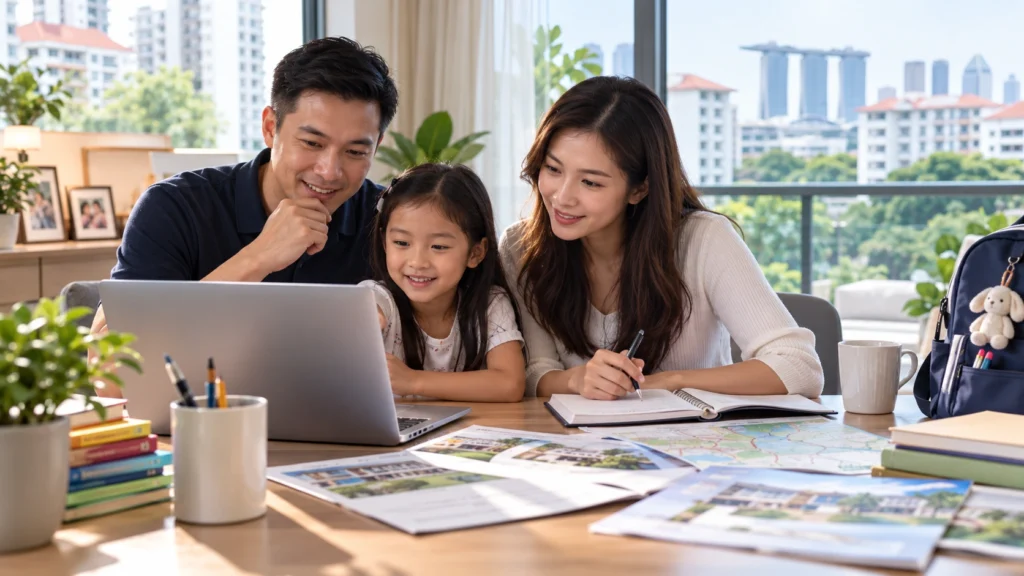
Parents can use official school information and P1 registration resources to identify suitable primary schools near their residential address.
Instead of asking only, “Which is the number one primary school in Singapore?”, a more useful question may be:
“Which good primary school is the best fit for my child and realistically accessible to my family?”
That change in perspective can make the selection process much more practical.
Are Primary School Rankings Important?
A Singapore primary school ranking can help parents create an initial shortlist.
It can show which schools receive strong registration interest and where competition for places may be particularly high.
But rankings should never become the only deciding factor.
Primary education lasts several years, and a child’s everyday experience matters more than the number attached to a school on an unofficial ranking table.
A school with supportive teachers, suitable programmes, manageable travelling time and an environment where the child enjoys learning may ultimately be a better choice than a famous school located far away.
How to Choose the Right Primary School in Singapore
Start by identifying schools located within a reasonable distance of your home.
Next, visit the official school websites and compare their programmes, values, CCAs and educational approaches.
After creating a shortlist, review previous and current P1 registration and balloting information. This can help you understand how competitive admission may be.
Parents should also consider practical issues such as transportation, school hours, siblings and family schedules.
The goal should not simply be admission to a “top-ranked” school. It should be finding a school where your child can learn, develop confidence and enjoy the primary school years.
Frequently Asked Questions
Which is the best primary school in Singapore?
There is no single officially designated best primary school in Singapore. The right school depends on the child’s needs, location, programmes and family priorities.
Does MOE rank primary schools?
MOE provides information about schools and P1 registration, including vacancies and balloting, rather than an official league table ranking every primary school from best to worst.
What is Singapore primary school ranking based on?
Different websites use different methods. Rankings may consider P1 registration demand, oversubscription, balloting history, reputation or other indicators.
Why are some Singapore primary schools oversubscribed?
A school becomes oversubscribed in a registration phase when the number of applicants exceeds the number of available places.
Does living within 1km help with Primary 1 admission?
Distance can provide priority during balloting. However, living within 1km does not automatically guarantee admission to a heavily oversubscribed school.
Is a popular primary school always better?
No. Popularity indicates parental demand but does not prove that one school provides better education than another.
Should parents follow primary school rankings?
Rankings can be useful for initial research, but parents should also consider distance, school culture, programmes, registration chances and their child’s individual needs.
How can I check P1 vacancies?
Parents can use MOE’s official Primary 1 registration resources to review registration information, vacancies and balloting updates.
Final Thoughts
The Singapore primary school ranking 2026 can provide useful insight into which schools attracted strong interest during the latest P1 registration exercise. Schools such as Princess Elizabeth Primary School, Northland Primary School, Nan Hua Primary School, Chongfu School and Rosyth School experienced particularly strong Phase 2C demand.
However, popularity should not be confused with educational quality.
Singapore does not have an official MOE league table declaring one primary school better than every other school. Parents should therefore use demand-based rankings alongside practical considerations such as home-school distance, programmes, school culture and their child’s individual learning needs.